Twinned credits · LIHTC · Historic · New Markets

Two credits on
one building

Historic credits rarely close the gap alone. Housing credits rarely justify saving the building. Twinned they do — if the structure is settled before the drawings are, because four of the decisions that matter get made on paper by an architect.

A-1.0

Where a twinned
deal is won
or lost

Historic credits alone rarely close the gap on a deep rehabilitation. Housing credits alone rarely justify saving a building worth saving. Together they do — but the structure decides how much of each you actually keep, and the structure has to be settled before the drawings, not after.

Basis is the whole argument

The dollar that cancels itself

In a single-tier deal the owner reduces depreciable and eligible basis by the amount of the federal historic credit. Every historic dollar comes straight back out of the housing basis it was supposed to help. People discover this late, and it is the single most expensive thing to discover late.

The master lease is the answer

And it is not free

Pass the historic credit through to a master tenant and the landlord does not reduce eligible basis. The historic investor instead takes income equal to 100% of the credit, amortised over 27.5 years. Two tiers, two sets of documents, and two investors — who have to be genuinely different parties.

It has a floor

Roughly $10MM in historic credit

Below that, the legal and operating cost of the second tier eats the benefit. It is also usually the wrong answer on a 9% deal already carrying substantial excess eligible basis. Knowing when not to do it is worth as much as knowing how.

The clocks do not line up

5, 10, 15, 30

Five-year historic compliance, a ten-year credit period, fifteen years of housing compliance, thirty years of extended use. The year-five flip and put have to be drafted against a right of first refusal that is two decades further out.

New Markets does not go on the apartments

The 80% test

A building is residential rental when 80% or more of gross rental income comes from dwelling units, and New Markets cannot be combined with housing credits on the same property. On a mixed-use building the usual answer is a condominium regime — a commercial unit for New Markets, a residential unit for the housing credit. That declaration gets drawn from architectural plans, which makes it an architect’s problem before it is a lawyer’s.

Then the state layer

Missouri 25%, Kansas 40%

State historic credits stack on top, and Kansas is uncapped and sellable, which is frequently what moves a rural or small-city deal from interesting to financeable.

A-2.0

What an architect
is doing in
your capital stack

Not structuring the deal — your counsel and your accountants do that. But four of the decisions above are made in drawings, and if the drawings are finished before anybody asks, they get made by accident.

Designing to eligible basis

What counts and what does not

Which work lands in qualified rehabilitation expenditure and which falls outside it is a design question long before it is an audit question. We draw knowing where that line runs.

The condominium is a plan

Drawn, then declared

Splitting a mixed-use building into a commercial unit and a residential unit is an architectural act. Units, general and limited common elements, vertical and horizontal boundaries — the legal document is written from the drawing.

Part 1, Part 2, Part 3

In house, on the filing calendar

Nomination, the rehabilitation proposal, and the certification that keeps the credit from being clawed back — filed on the calendar the closing depends on, not after it.

The Standards against the program

Where they actually collide

Unit counts, corridor layouts, window replacement, energy requirements and accessibility all have an answer the Secretary of the Interior’s Standards will accept and several they will not. Finding that answer early is the difference between a conditional approval and a redesign.

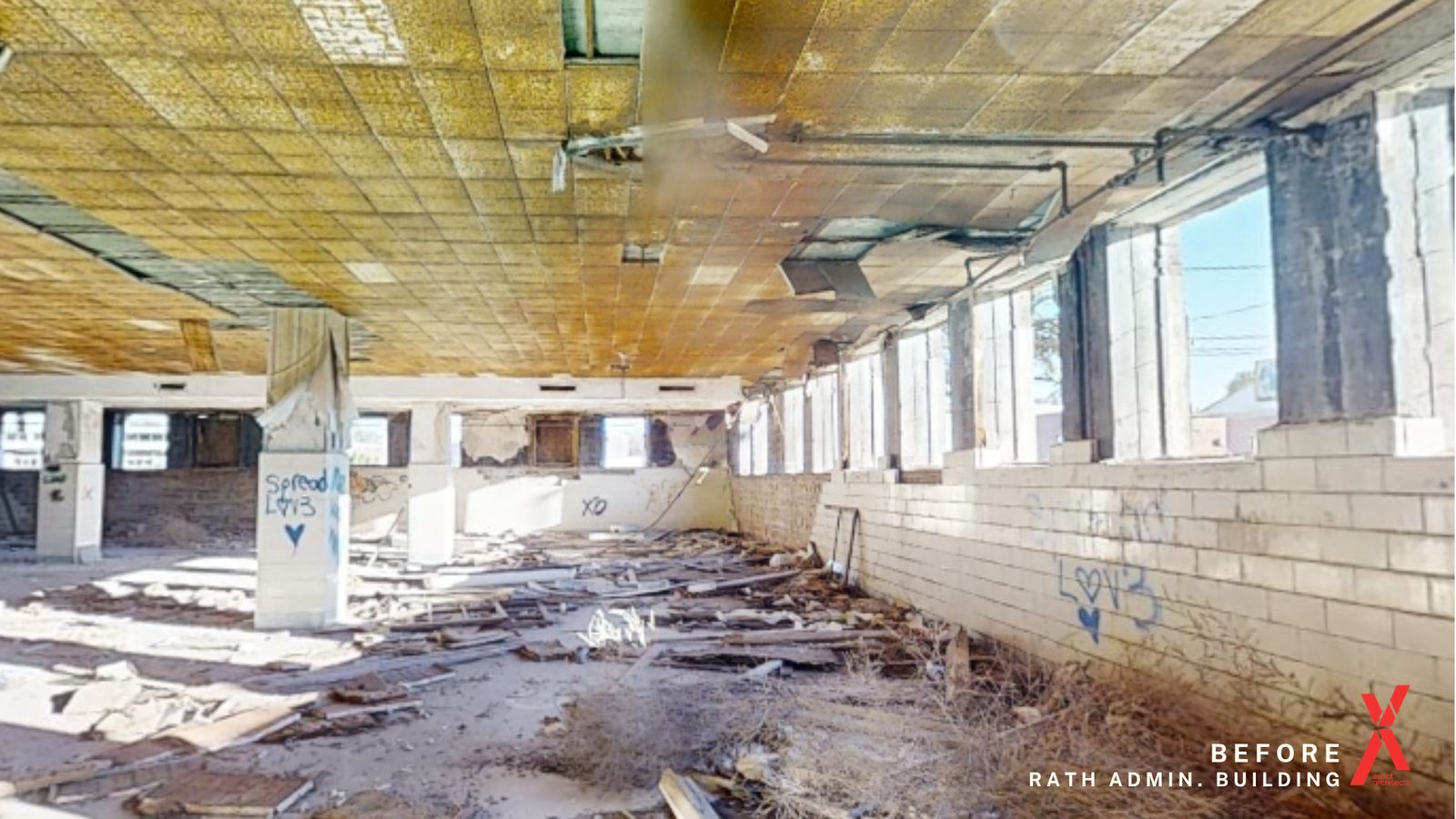
The Rath Administration Building in Waterloo, Iowa as found, in design as affordable housing
The ABC and Anderson buildings on Main Street as designed

Everything on this page is a description of how these programmes generally work, not tax or legal advice, and none of it is a substitute for your own counsel and accountants. Rules change and the facts of a particular deal change the answer.

Send us
an address

There are three ways people bring us in.

  1. You need a preservationistNational Register nomination, Part 1, 2 and 3, SHPO and NPS review, and the documentation that keeps a credit from being clawed back later.
  2. You need an architect and engineerDrawings, structure and MEP in house, the permit set, and construction administration through certificate of occupancy.
  3. You need the whole projectFeasibility through opening day — design, the incentive stack and construction under one contract, with one name on it.

Tell us which one you are. Or send an address and we will tell you.

Somebody walked past
every one of these
EXACT Architects — Kansas City

EXACT Architects
3901 Main Street, Suite 201
Kansas City, Missouri 64111
816.200.0340
office@exactarchitects.com

Send us an address →