Best Adaptive Re-UseHonors
The Dairy Apartments — Aines Dairy, 3130 Gillham Road.
 Kansas City Firm of the Year
Midwest Real Estate Journal
Kansas City Firm of the Year
Midwest Real Estate Journal
Adaptive Reuse · Historic Tax Credits · Design-Build — Complex Urban Property, Kansas City
We turn complicated buildings into financeable projects. Architecture, engineering, historic tax credits, incentives and construction — from first feasibility through opening day, under one roof, with one name on it. Every building we've taken on, somebody else walked past and called it a teardown. Send us an address and we'll tell you what we see.
Most firms hand you their scope and ask you to fit inside it. We'd rather meet you where you already are — feasibility, entitlements, money, drawings, dirt, or the whole road. Three doors. One of them's yours.
Empty floors. A roof you think about at two in the morning. A tax bill that shows up whether anything happens in there or not. We'll tell you what it wants to be, what that costs, what credits it earns you, and whether it's worth your trouble. All of it before you've spent a dollar you can't get back.
Let's find out what it is → 02 — Public + NonprofitA city, a CDC, a nonprofit board — somebody who has to answer for a block, not just a building. We've come up through land banks, abatement districts, Central City dollars, New Market allocations, and a Habitat partnership. We know what a selection committee is reading for, because we've sat on that side of the table — and we understand that the real measure of this work is the public good it leaves behind.
See what we've done for towns → 03 — DevelopersArchitect of record on a credit deal. The Part 1, Part 2, Part 3 paperwork nobody wants. A housing credit application on a deadline. Somebody to stand in for you on a job already underway. Or a hard number with our name behind it, because you'd rather buy the ending than manage the middle.
Here's where we fit →There's more good building coming onto the market than at any time in fifty years, and most of it will land with owners who've never done one of these. Four kinds. Each one will break a team that treats it like new construction — and each one breaks differently. We've finished all four.
The office towers stopped filling up and they aren't going to. But the old ones — the narrow ones, built before air conditioning was a given — those were designed for daylight and a window you could open. Turns out that's exactly what somebody wants to live in. Faster than building new. Greener than building new. And on the right vintage it's the only road that carries close to 45% back in credits.
Our proof: 929 Walnut — a 1922 downtown office building converting to lofts over ground-floor commercial. 1044 Main. The Denver campus.
Closed hospitals. Empty schools. Federal buildings with nobody left in them. Church property the diocese can't carry anymore. They're big, they were built by people who expected them to last, and half of them are Register-eligible. Best part: the seller usually cares more about a plan they believe in than a number. The hard part was never the building. It's the eighteen months of approvals.
Our proof: Denver VA Medical Center — 493 apartments across an 8.25-acre decommissioned campus. The Immaculata block in Leavenworth. North Broadway School.
Lay new rail and something happens to the ground beside it. For a little while land is still cheap and density suddenly makes sense, and that window doesn't stay open. Usually there's nothing left to save — the city took it down decades back. What's there instead is an overlay plan, a design review, and a neighborhood that remembers exactly what used to sit on that corner.
Our proof: 27th & Troost. ABC & Anderson on the Main Street extension. The Netherland, bought ahead of the same line.
Waterloo. Leavenworth. St. Joseph. Main street communities with intact building stock, proud histories, genuine housing demand, and state credit programs that often pay better than Missouri's. What they've been waiting on isn't ambition — it's a partner who can assemble the capital stack. Bring that, and a close-knit community will move faster, decide quicker, and stand behind a project longer than any big-city market will.
Our proof: Rath Administration Building, Waterloo. The Leavenworth Local Hotel. HL29 Modern Flats, St. Joseph. Shell Dash, St. Petersburg.
Somebody had written off every building on this page. What turned each one around wasn't a drawing — it was the stack underneath it. Credits, abatements, allocations, layered in the right order until an impossible pro forma closes. Most architecture firms hand that part to somebody else. We never have.
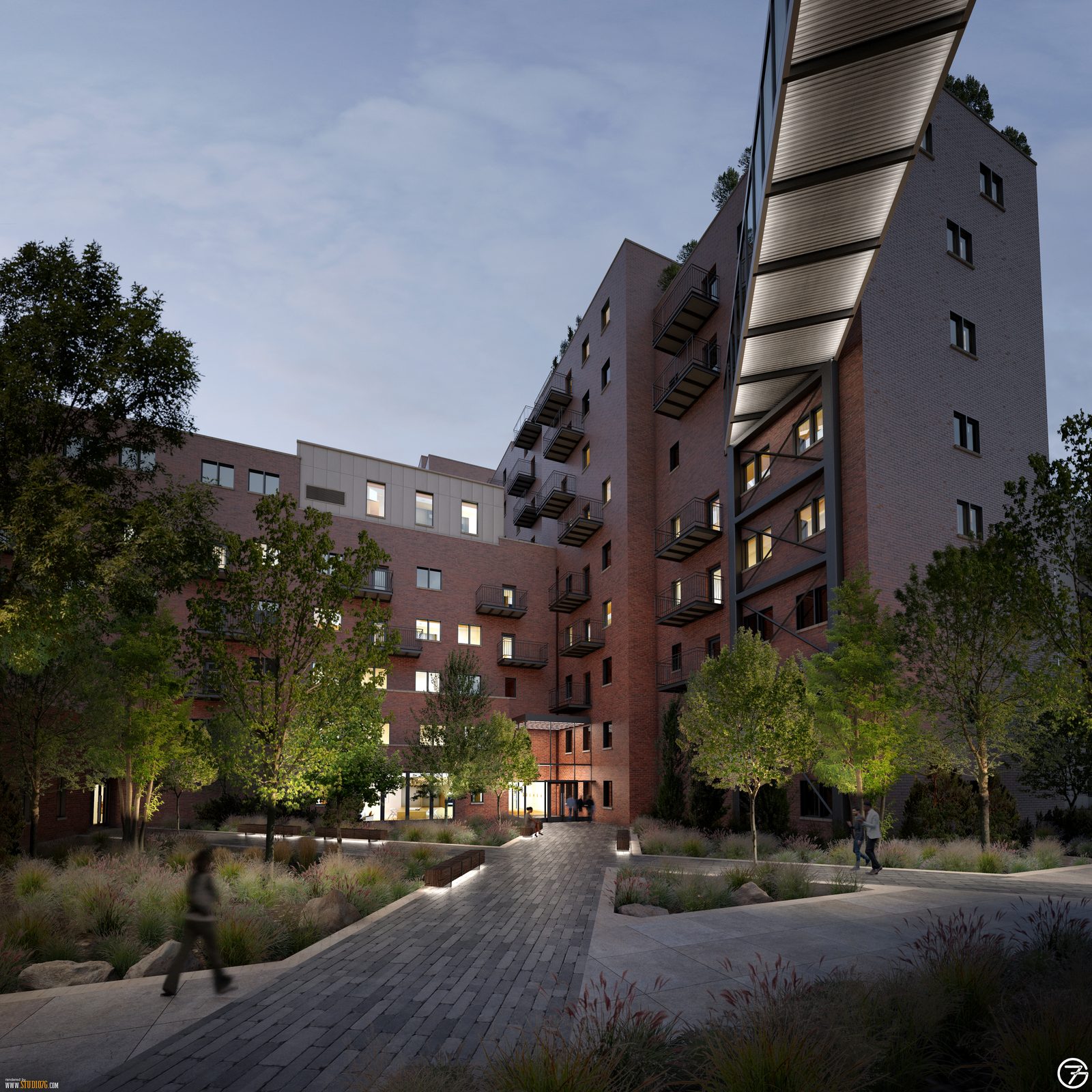
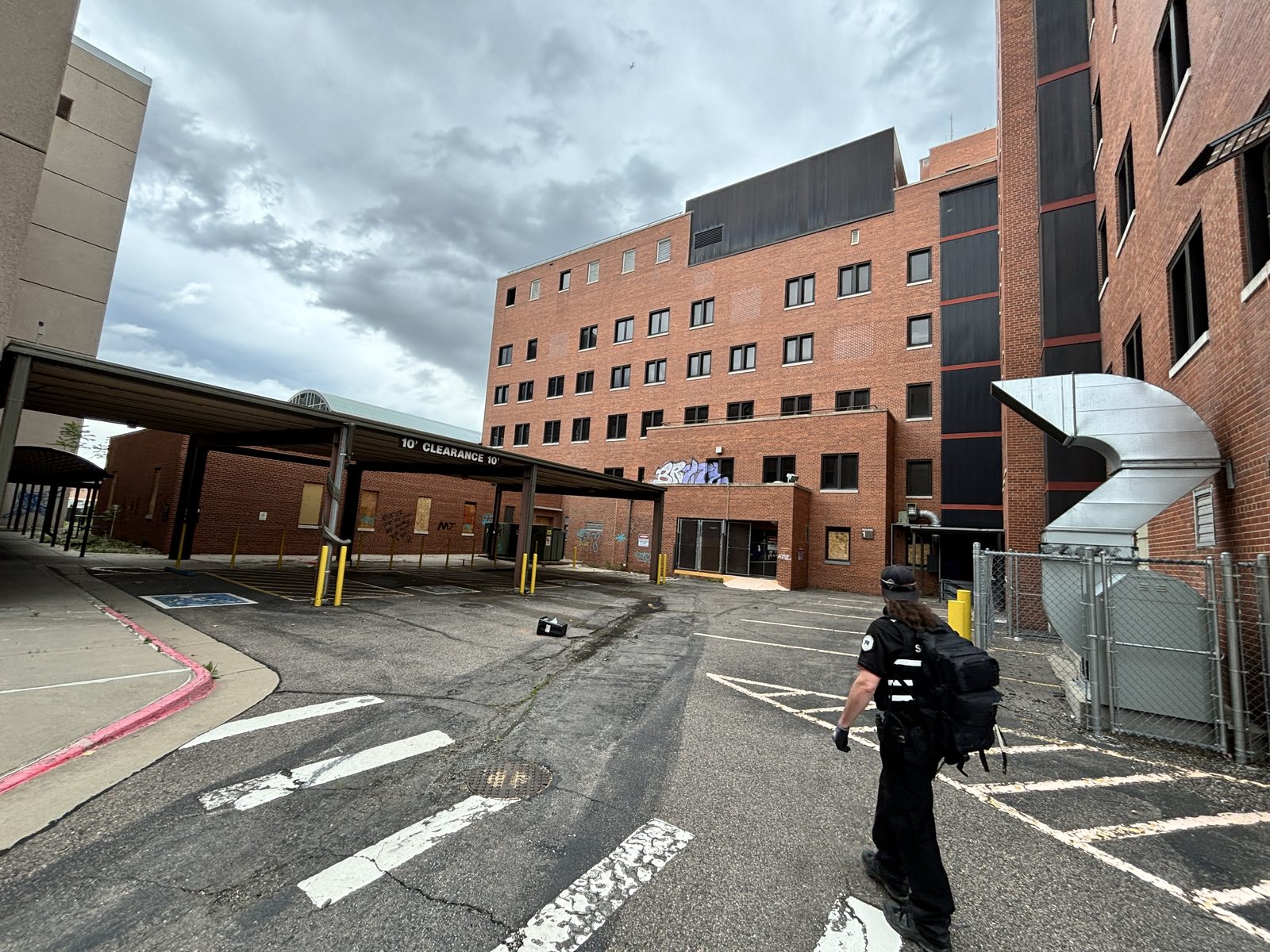
1055 N Clermont Street — Denver, Colorado
Eight and a quarter acres of shut-down VA hospital, coming back as 493 apartments — among the largest historic conversions underway anywhere in the country, financed through HUD's 221(d)(4) program alongside the full historic credit stack. Complicated campus, complicated floor plates, and a federal underwriting track running right beside the preservation review. Somebody built this place for veterans. It's going to hold people again.
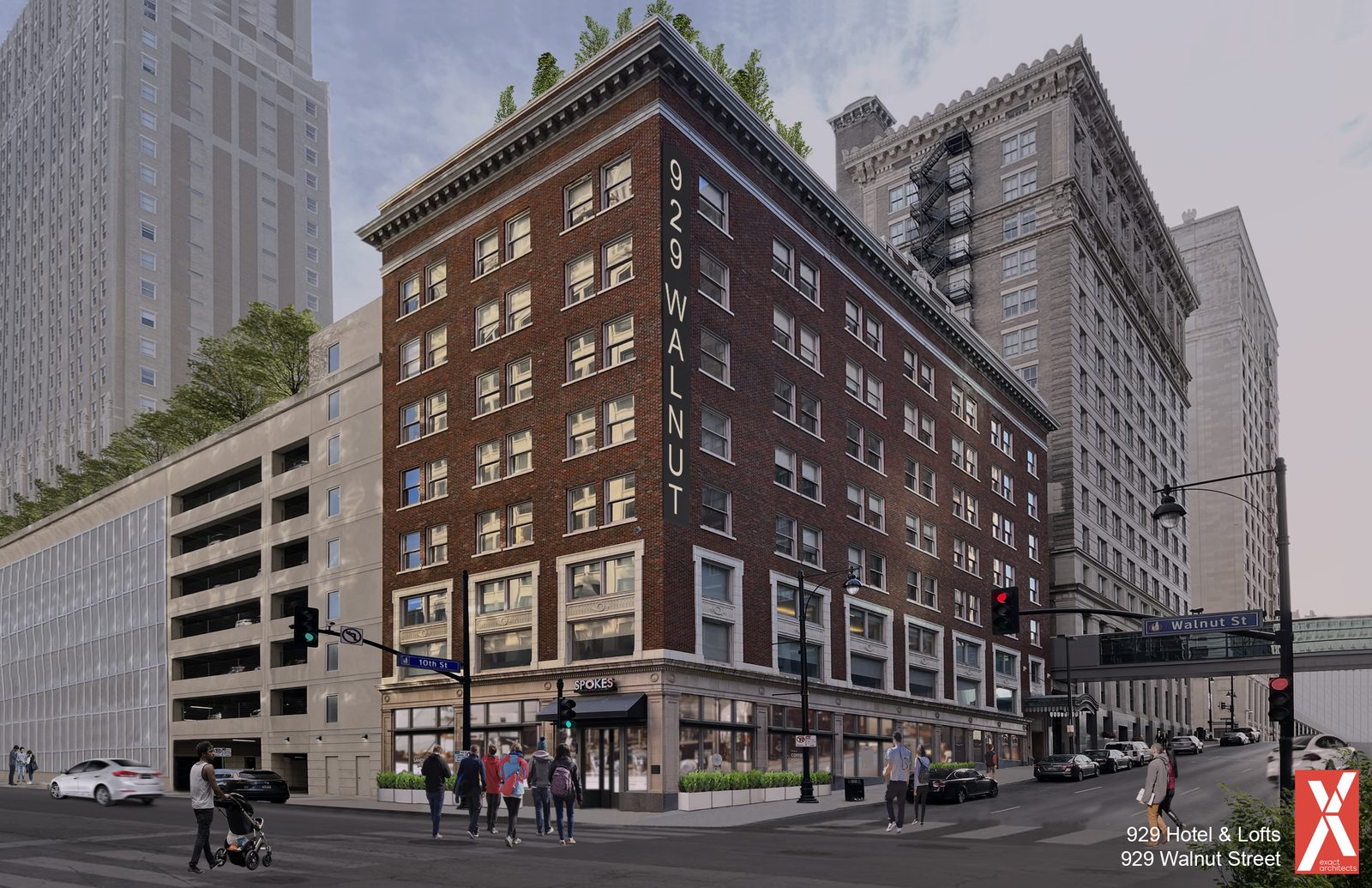
929 Walnut Street — Downtown Kansas City, Missouri
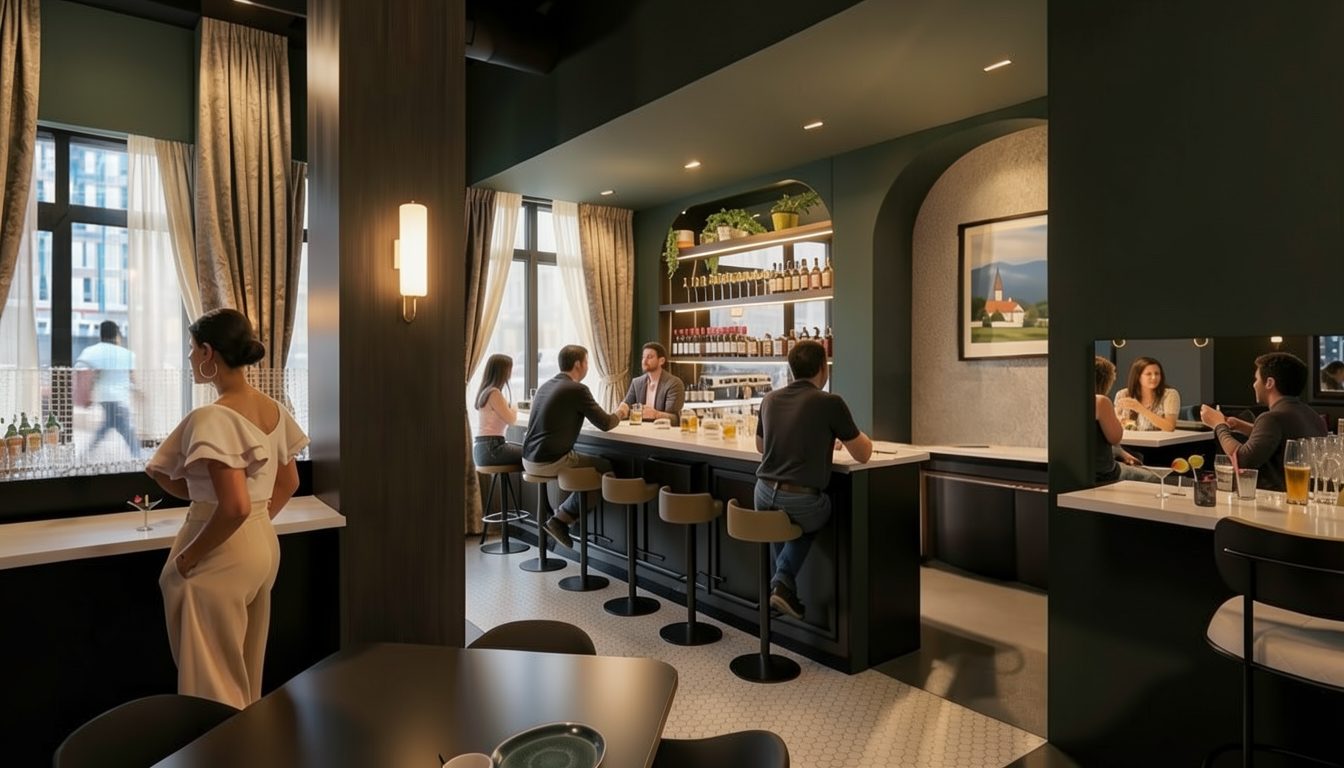
A 1922 bank-district office building at 10th and Walnut, acquired in early 2024 and returned to service as 49 loft residences over three levels of commercial — a café at the corner, the Remedy bar behind the old vault door below. Open and fully leased. Fully leased. Office-to-residential is greener, faster, and less costly per unit than building new, and on a building this age it's the only road that carries the full federal and state credit stack. The proof point for the whole thesis, one block from the free streetcar.
Campbell Baking Co. Factory, est. 1915 — Troost Corridor, Kansas City
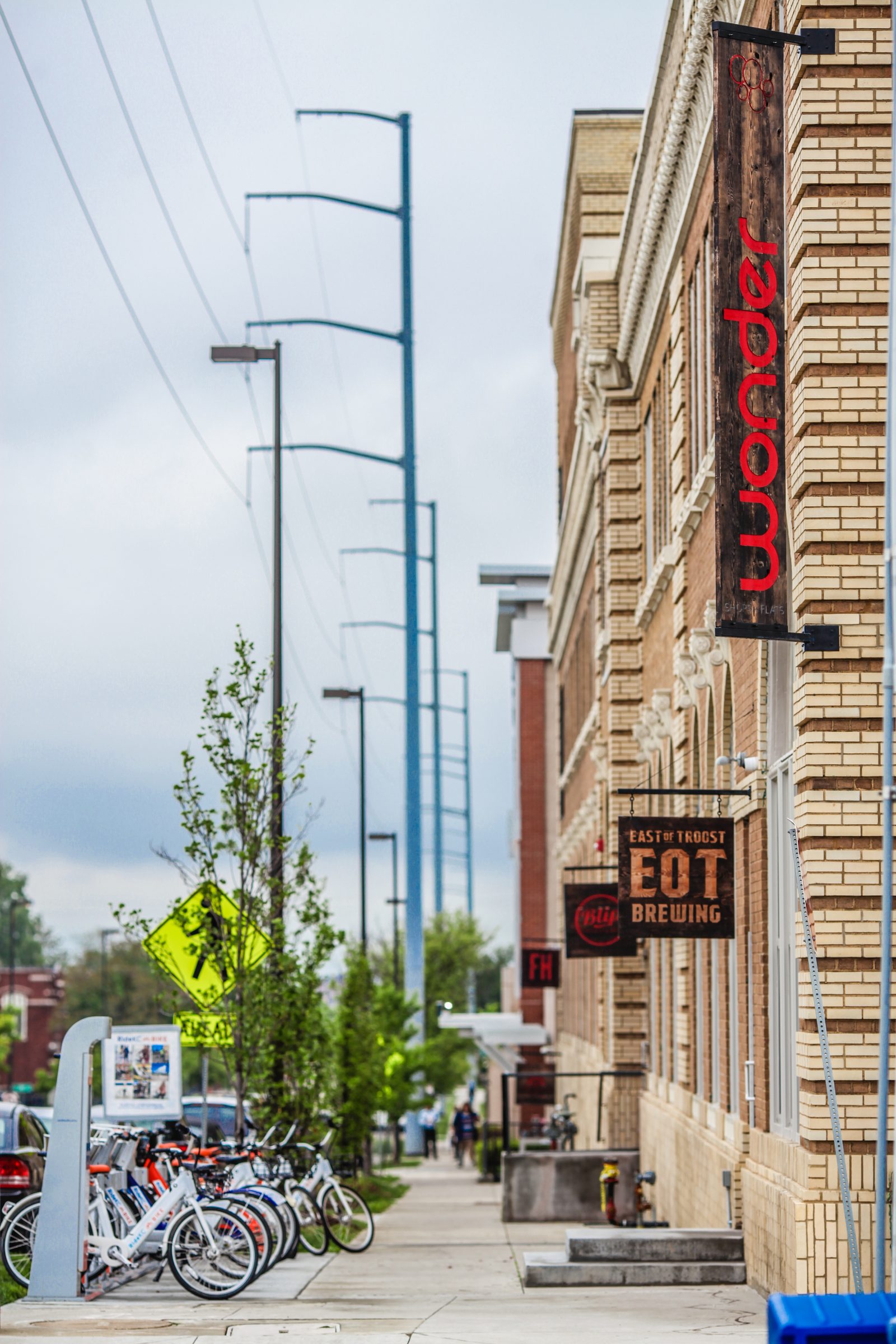
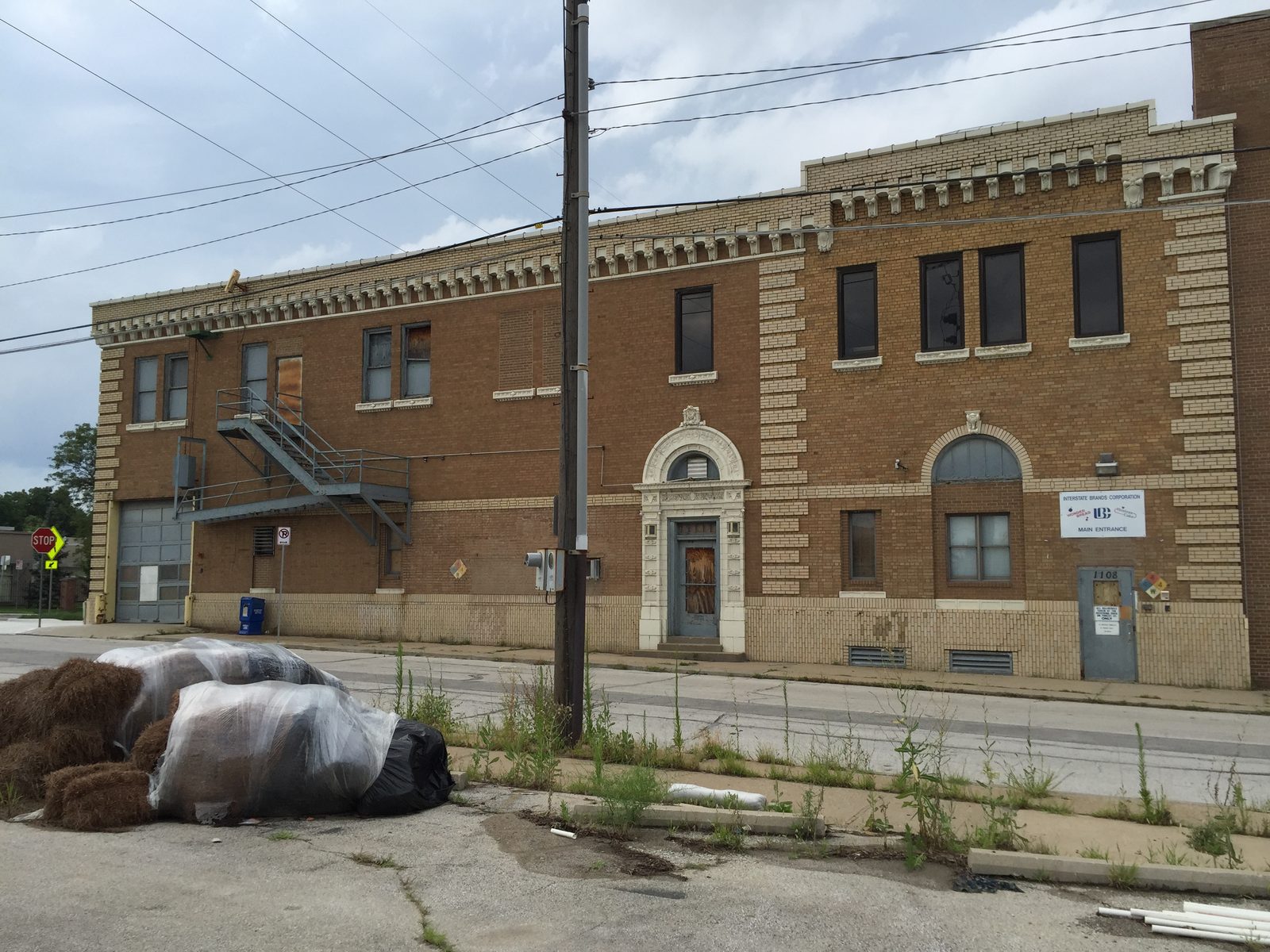
A bakery that fed and employed this city for a hundred years, then sat covered in graffiti while everybody agreed it was a shame. We brought the Romanesque envelope back and put 87 apartments behind it, plus sixteen commercial bays — and we filled those bays on purpose, with BikeWalkKC, Homeroom Health, RideKC Development Corporation, Love Is Key, and The Combine. Around eighty jobs came with it. Crime on that block went down.
Aines Dairy, 3130 Gillham Road — Midtown, Kansas City
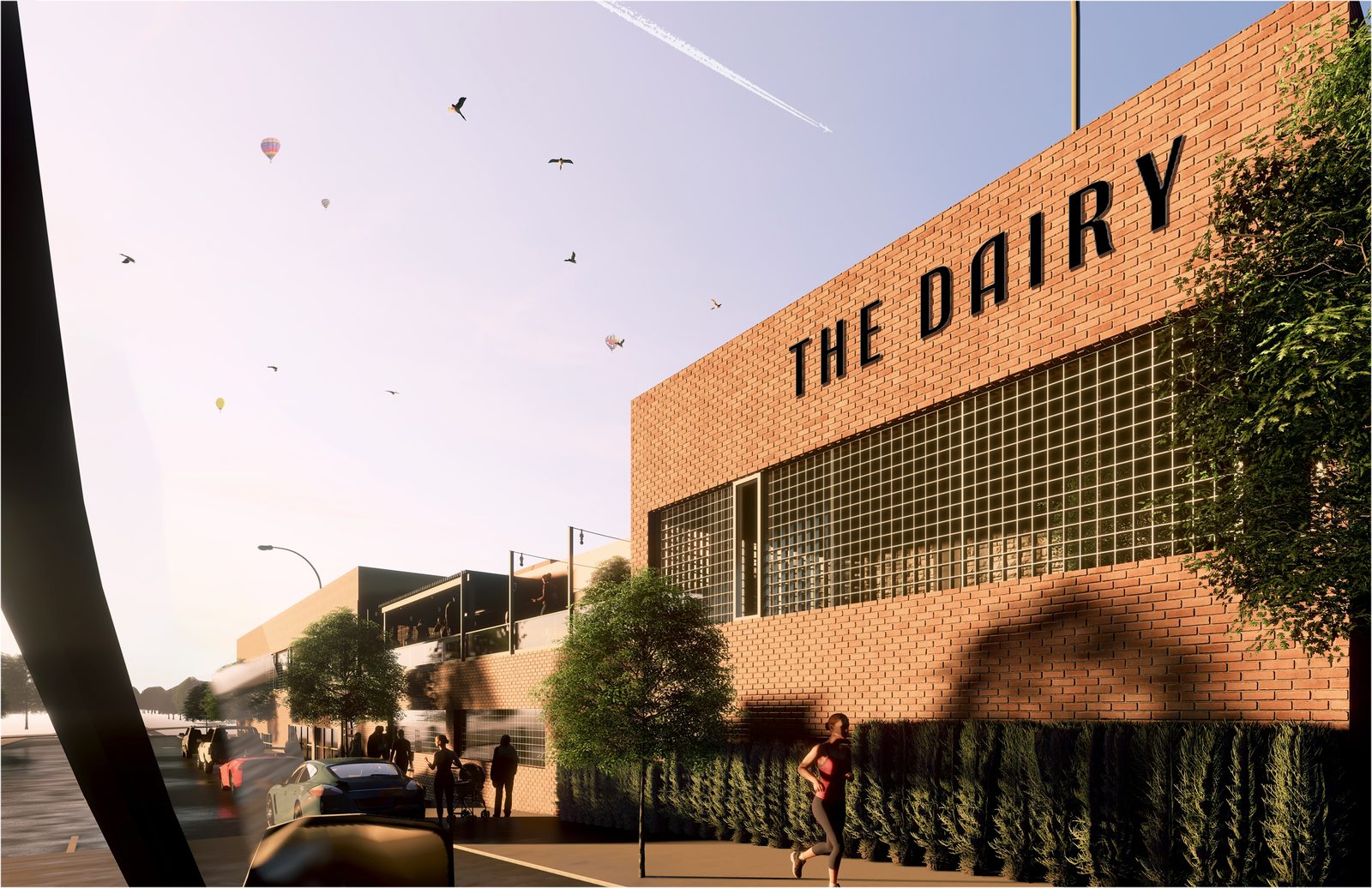
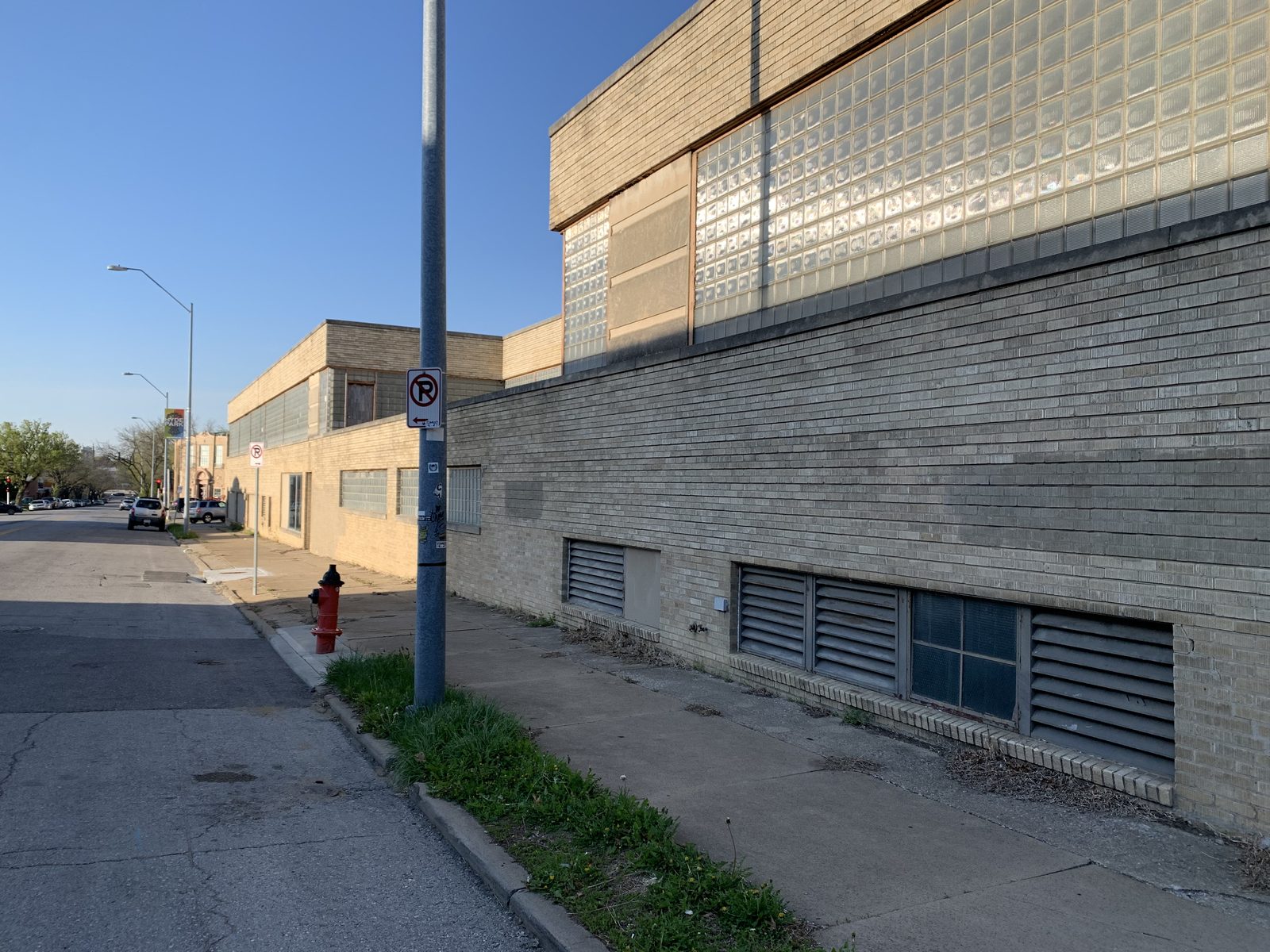
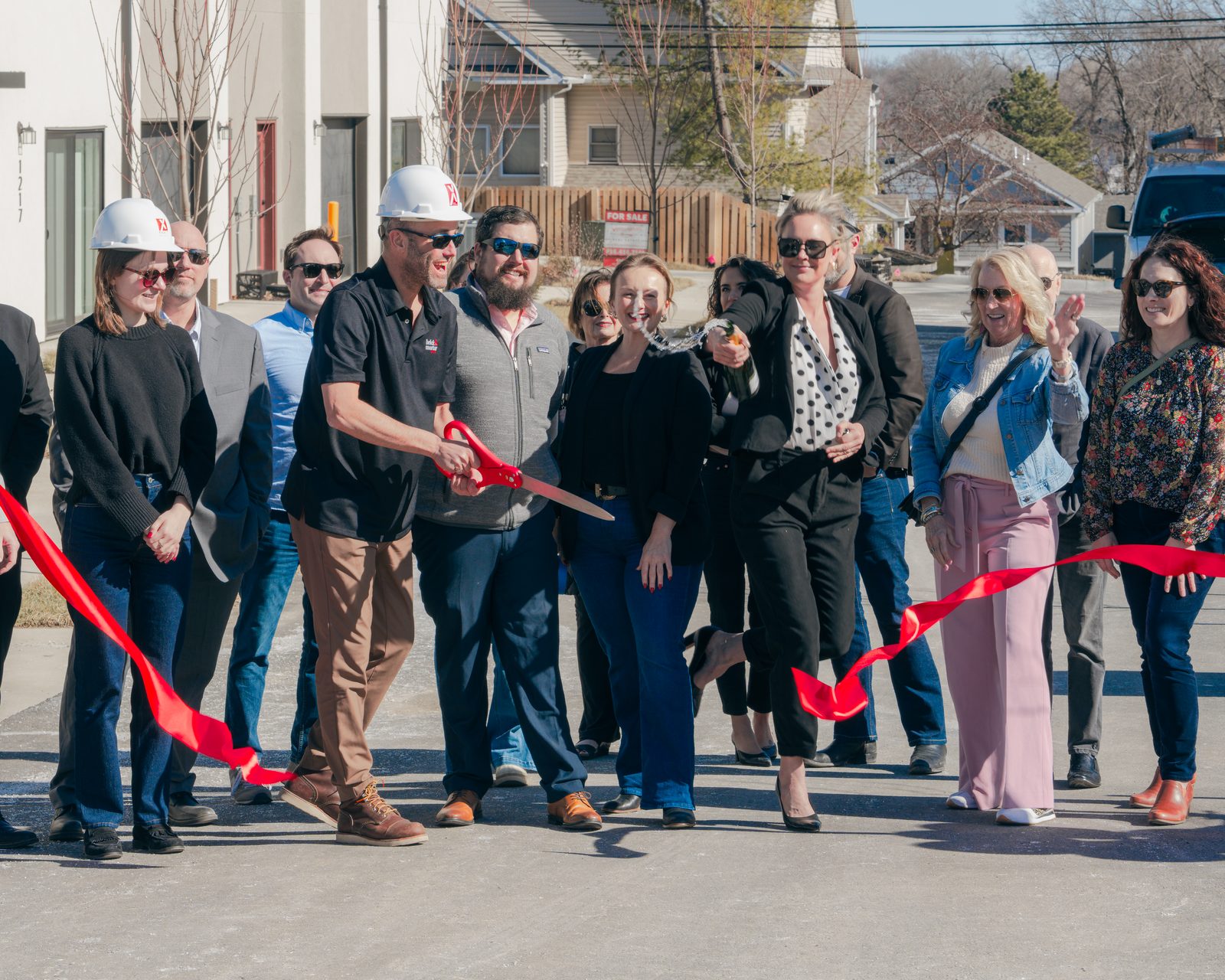
A Streamline Moderne dairy plant. Milk left here for all of Midtown before anybody had a refrigerator. Then twenty years empty, pulling graffiti and dumping onto a block that had businesses trying to make it. Now 40 apartments and a market facing the street, steps from Martini Corner. Historic Kansas City gave it Honors for Best Adaptive Re-Use in 2025.
3244 Main Street — Kansas City, Missouri
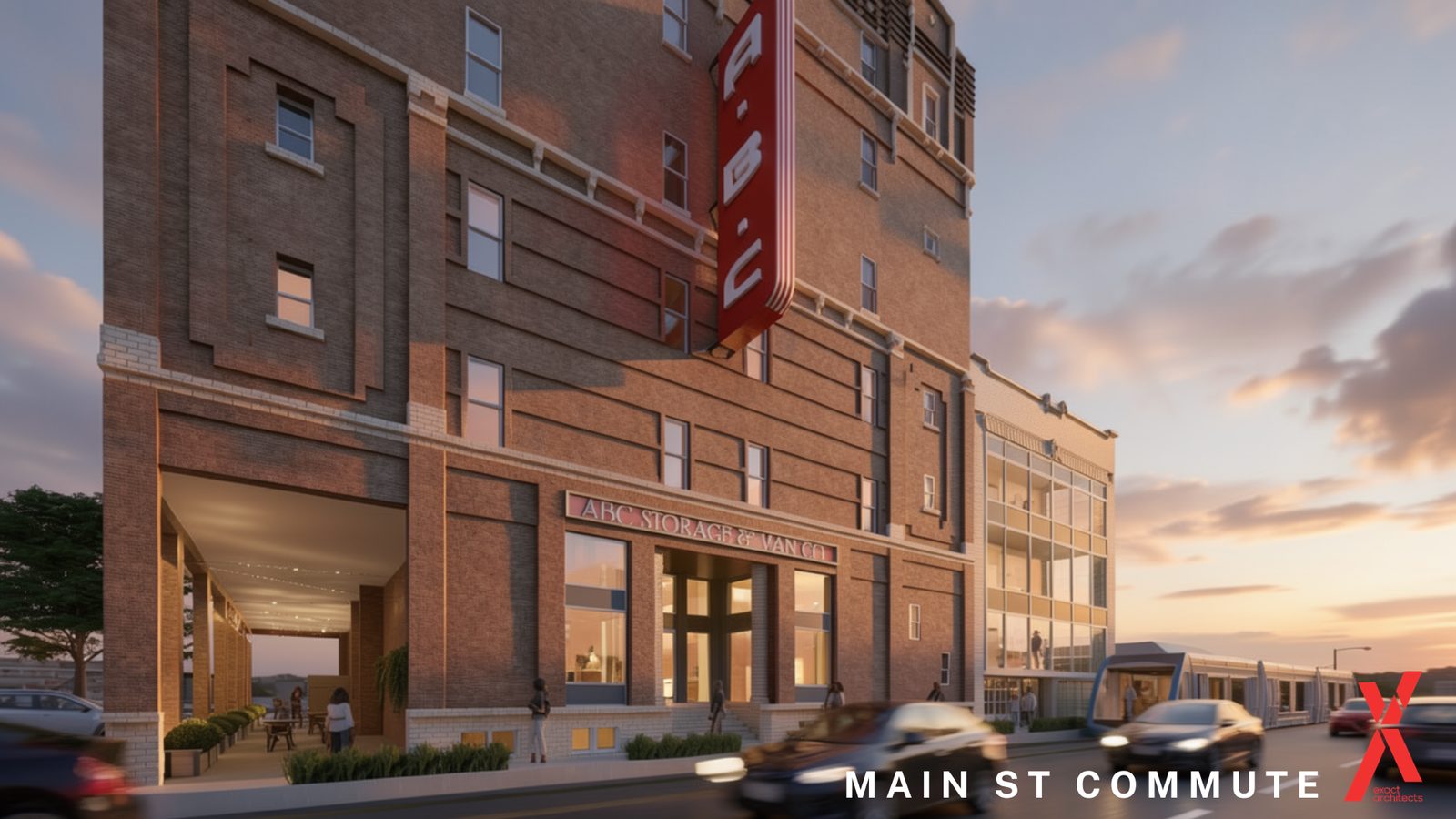
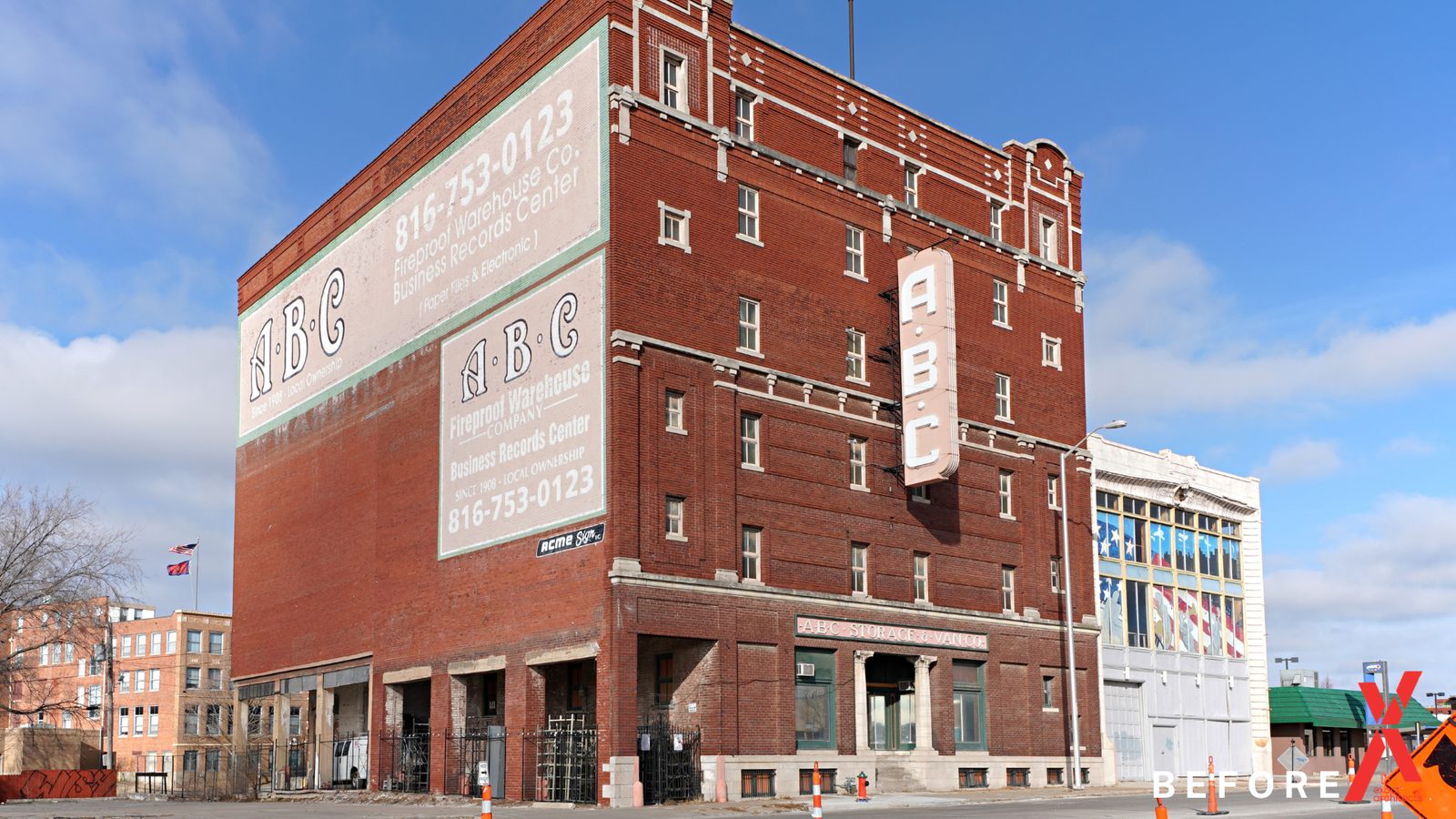
Two century-old Main Street buildings — the 1908 ABC Storage & Van Co. and the 1911 Anderson Electric Car Co. — stitched into 52 lofts with restaurant, café, and retail at the sidewalk, beneath the restored ABC marquee. Historic Kansas City put both buildings on its most-endangered list in 2019; by 2024 it was calling this project a success story. The streetcar now runs past the front door, and the doors open the summer after — a bet on a corridor that lost most of its people after 1950 and is getting them back.
The Mutual Building, 1919 — 405 E 13th Street, Downtown Kansas City
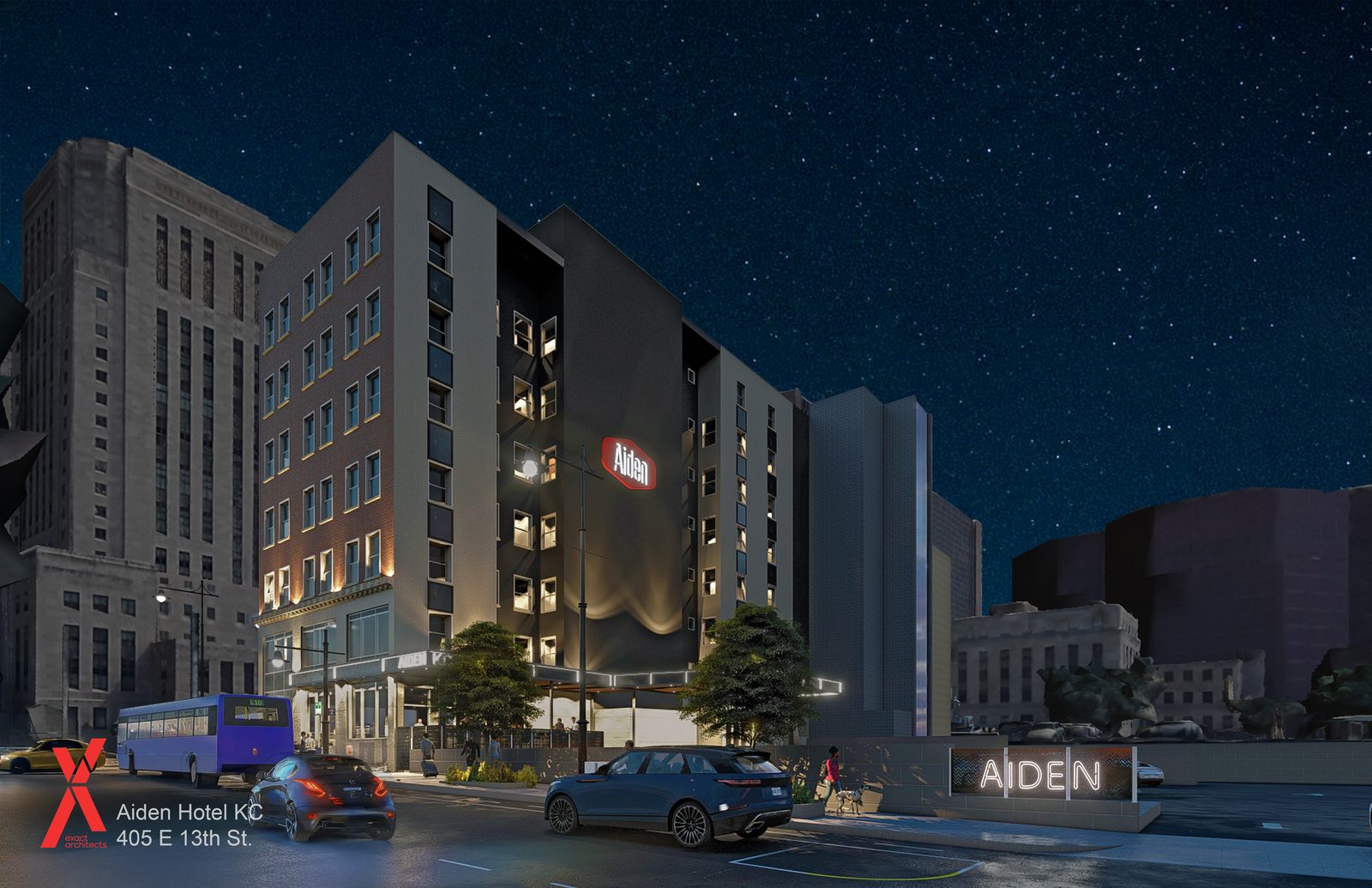
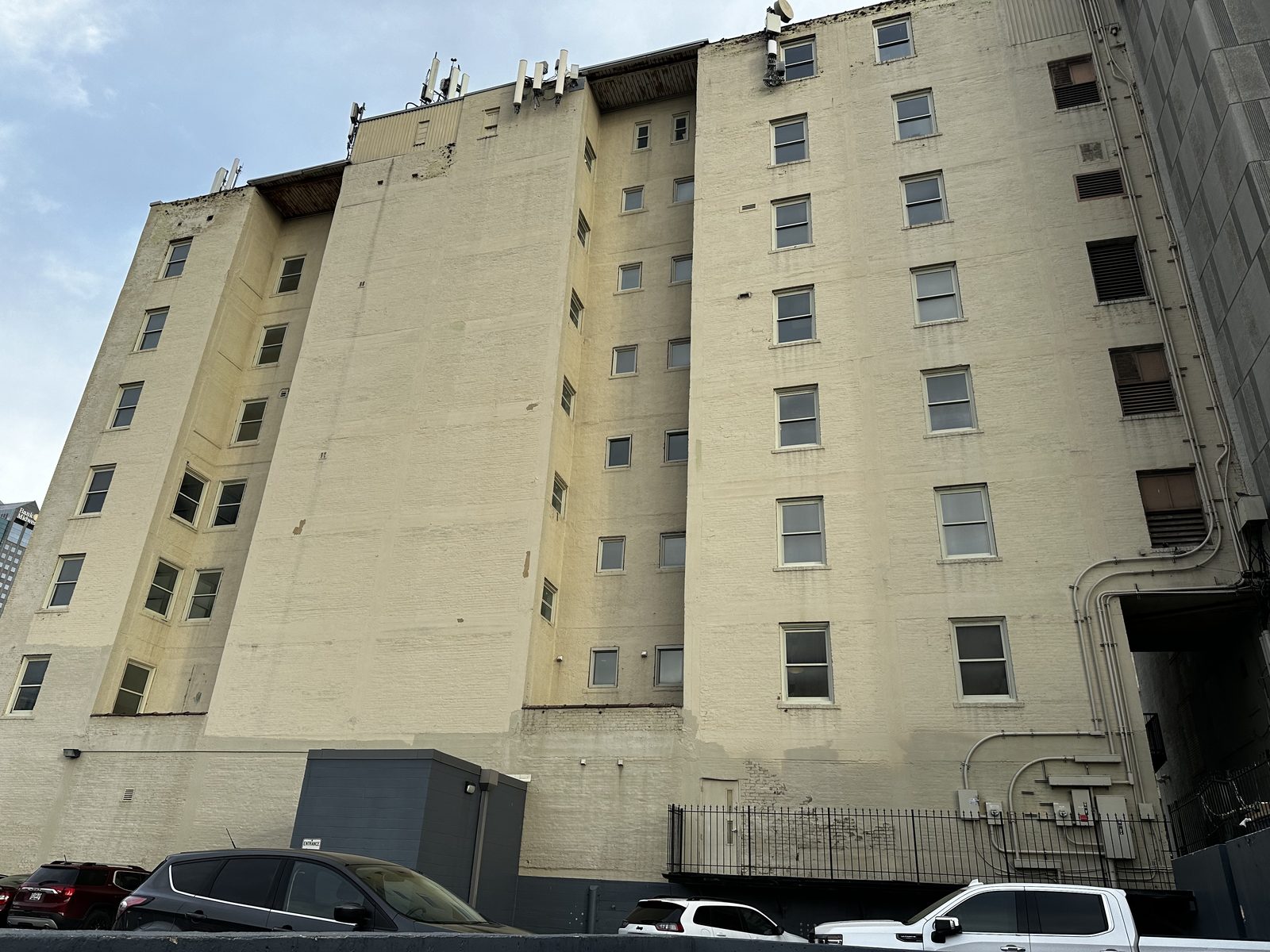
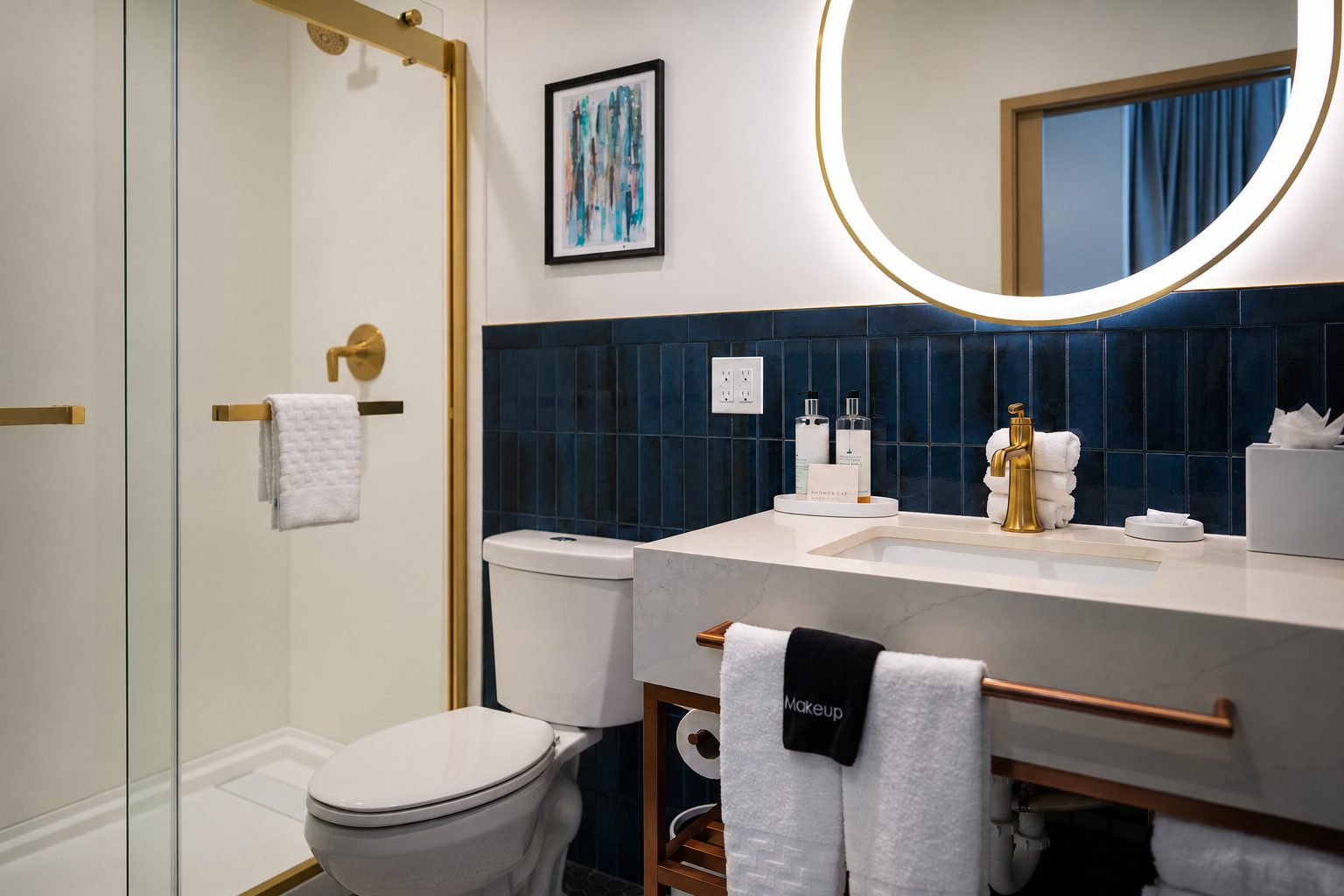
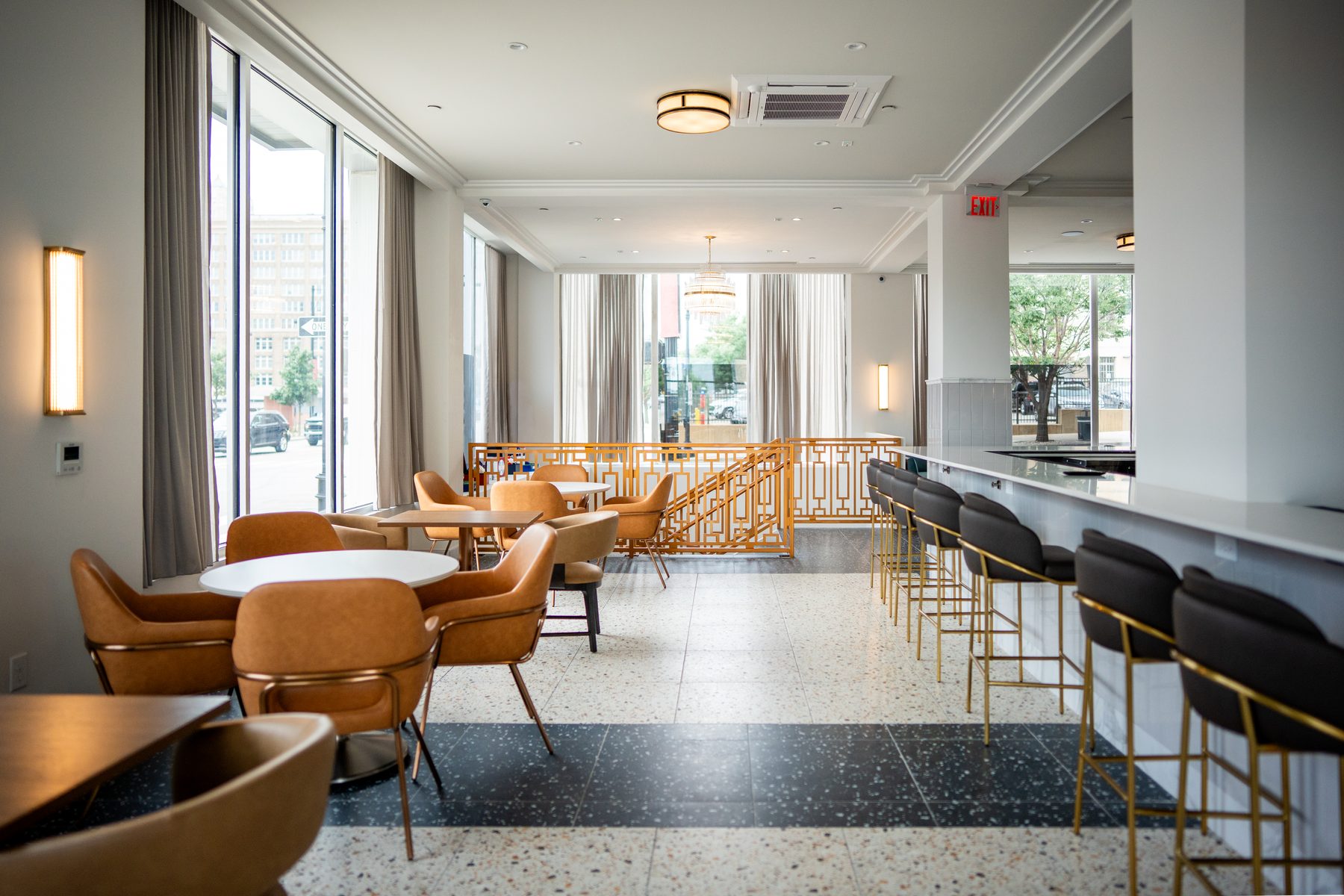
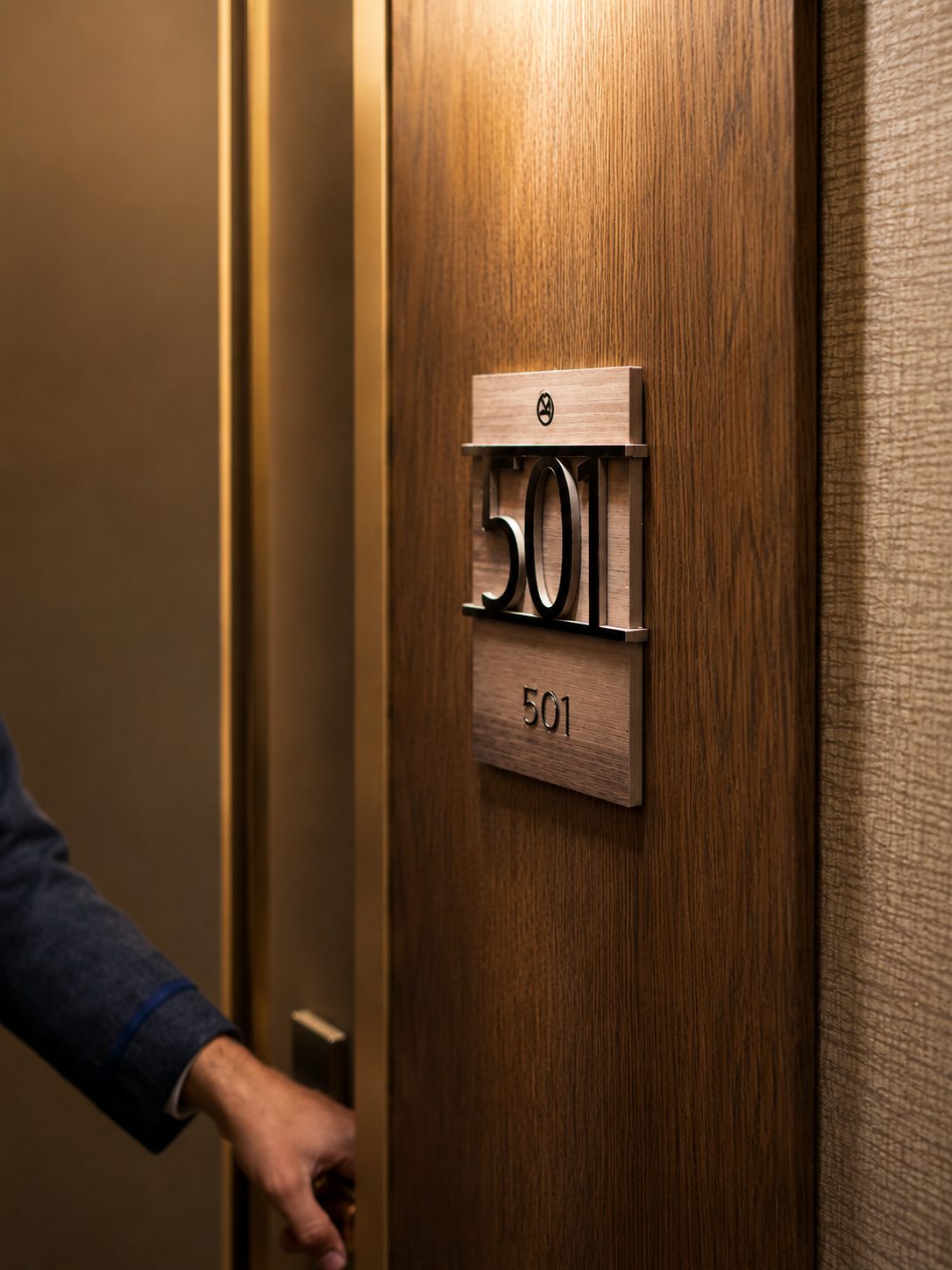
The Mutual Building has stood at 13th and Oak since 1919. It reopened in September 2026 as Aiden Kansas City Downtown, built on what this city already is — railroads and industry, in that order, with the Art Deco kept where we found it. Bistro on Oak at street level, a fitness floor and business center, transit-inspired lighting down the corridors, distressed leather, terrazzo, brass, and deep blue tile. The original bank vault is still in the building and guests walk past it, because tearing it out would have been easier and worse. Across from City Hall, a walk from Power & Light, the streetcar, and the convention center. Everything in these photographs is built. It’s taking guests.
Harvey-Dutton Dry Goods Co., est. 1903 — Garment District, Kansas City
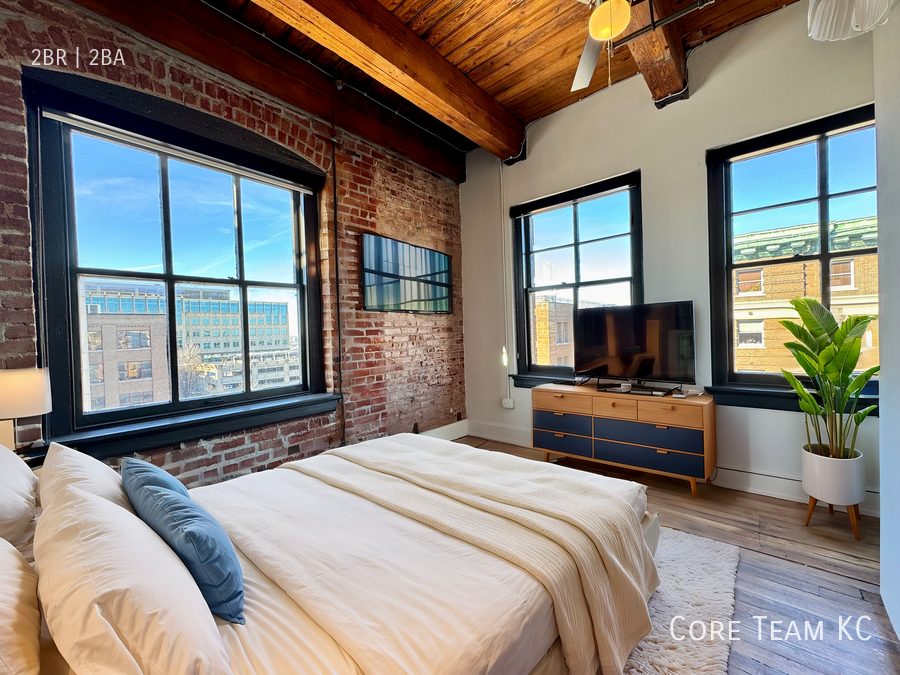
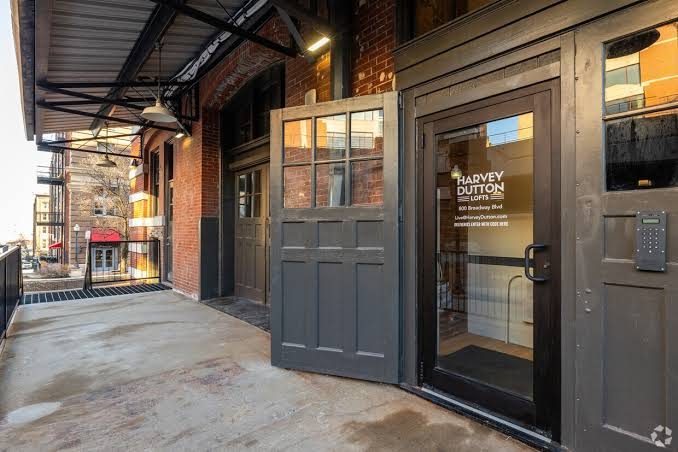
A dry goods warehouse from 1903, back in service as homes, with a restaurant, café, and retail down below. It sits right over a public pocket park — so we're working with the City to fix that park up and program it, because a ground floor needs something worth facing. Historic Kansas City gave it Honors for Neighborhood Stabilization in 2025.
1515 Sycamore Street — Waterloo, Iowa
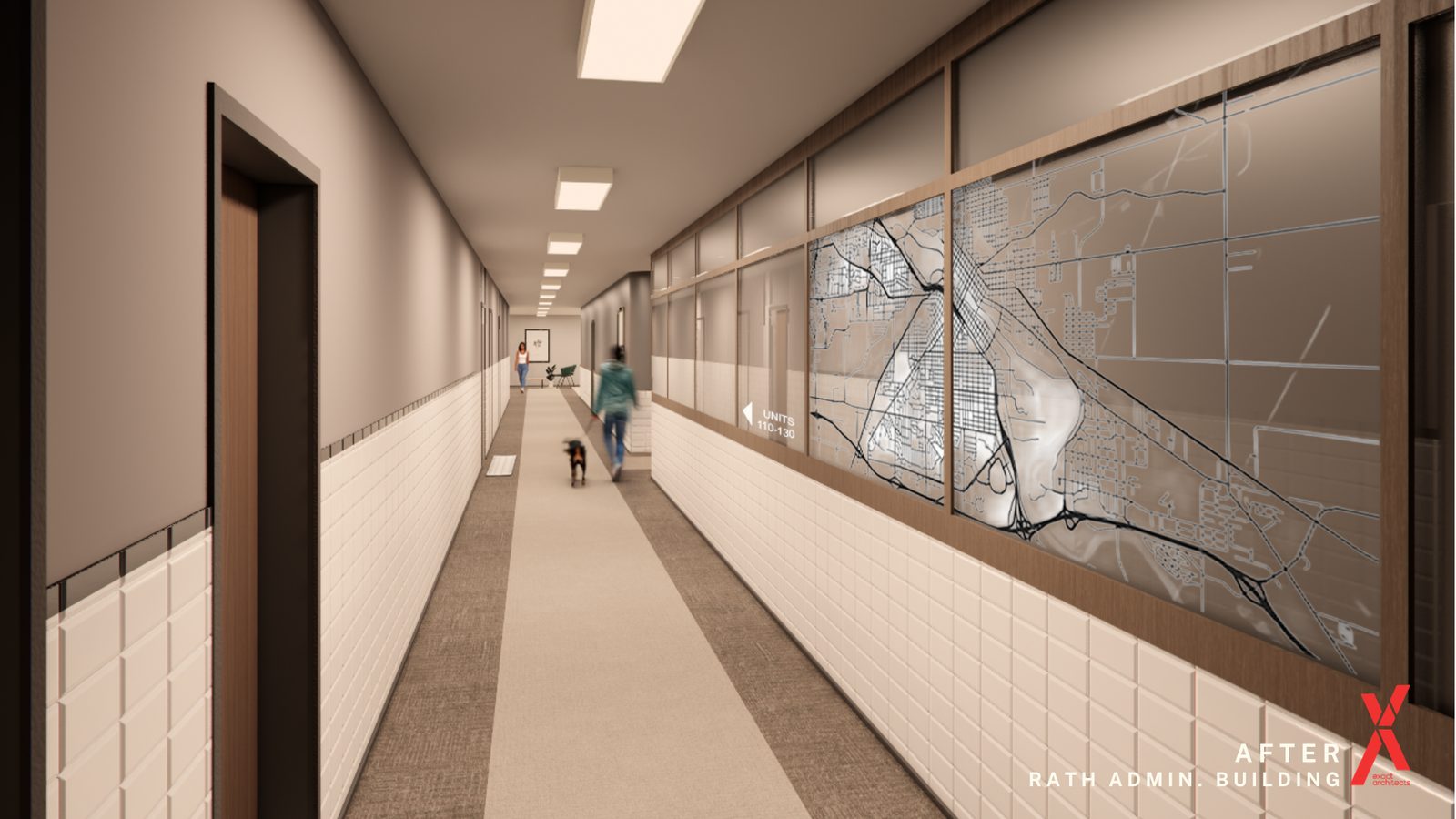
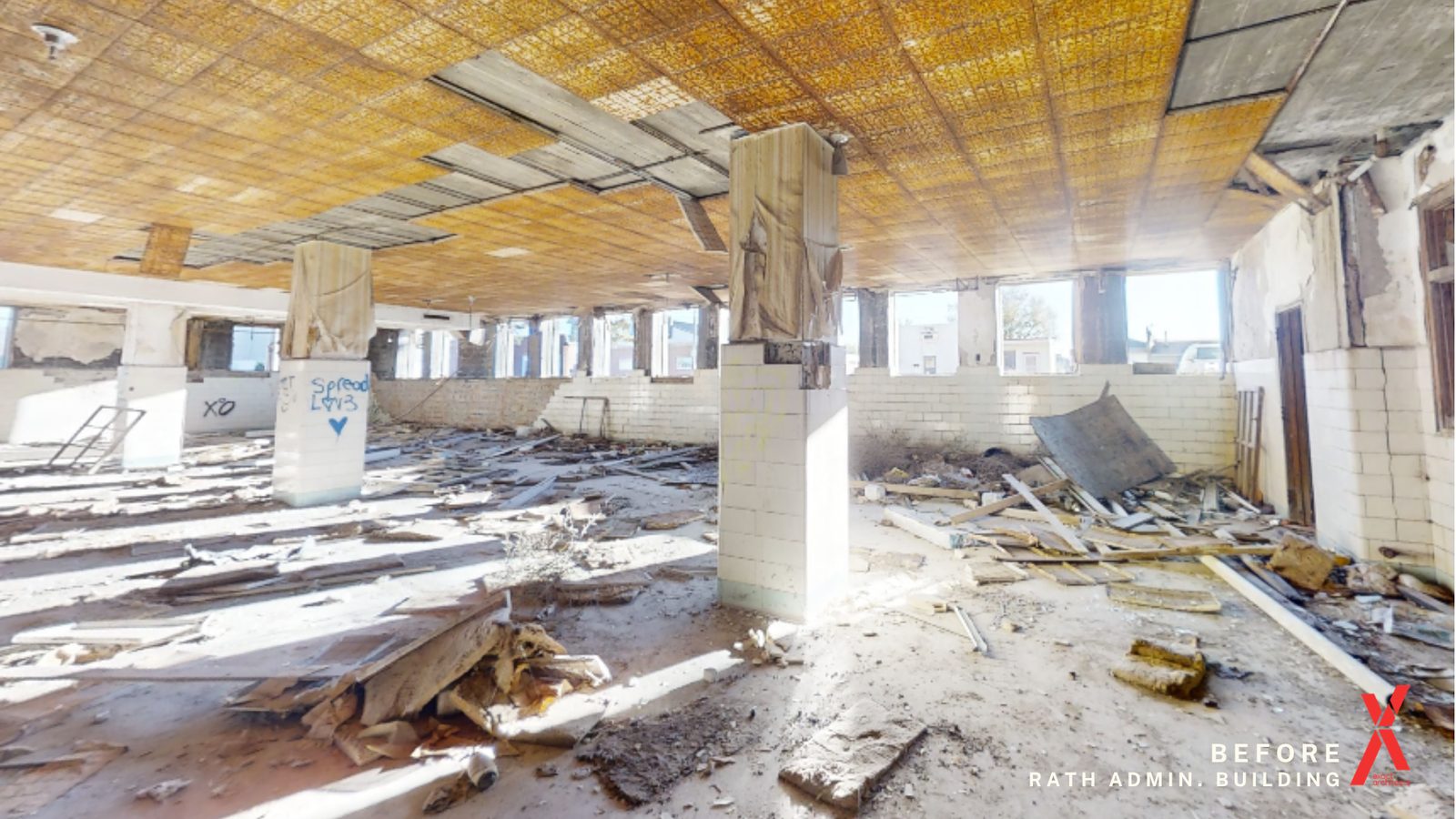
The administration building of an old meatpacking works, becoming 87 affordable homes. Stacking housing credits on top of historic credits is where most of these deals die — two rulebooks, two agencies, two compliance clocks that don't line up. It's also the only place the deepest affordability actually comes from. So you learn to do it. Inside, the corridors carry a map of Waterloo etched across the glass, and the kitchens hang Rath Packing Company posters — the building decorated with the heritage of the workers who built it.
39th & Main — two buildings, est. 1928 — Midtown, Kansas City
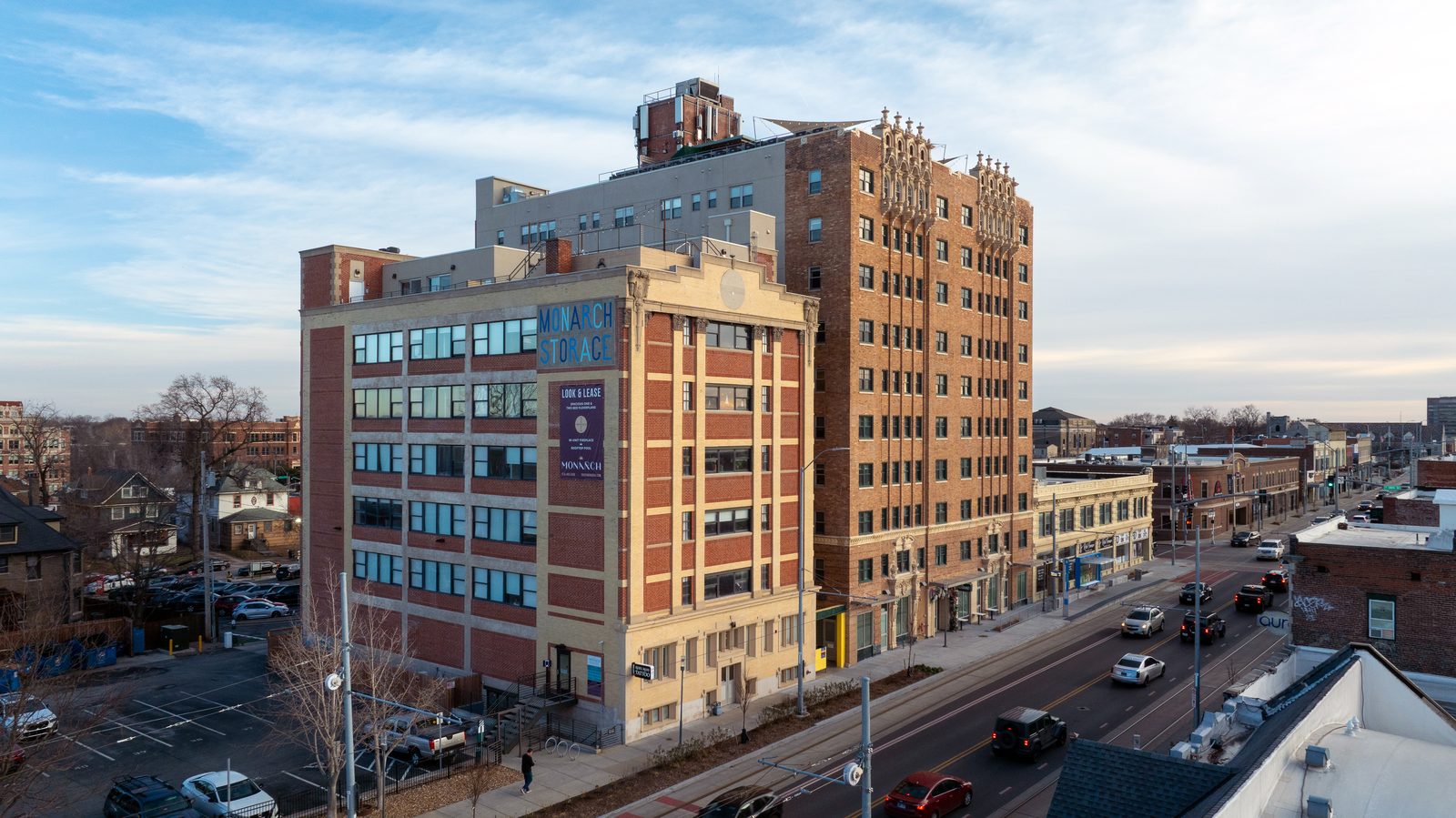
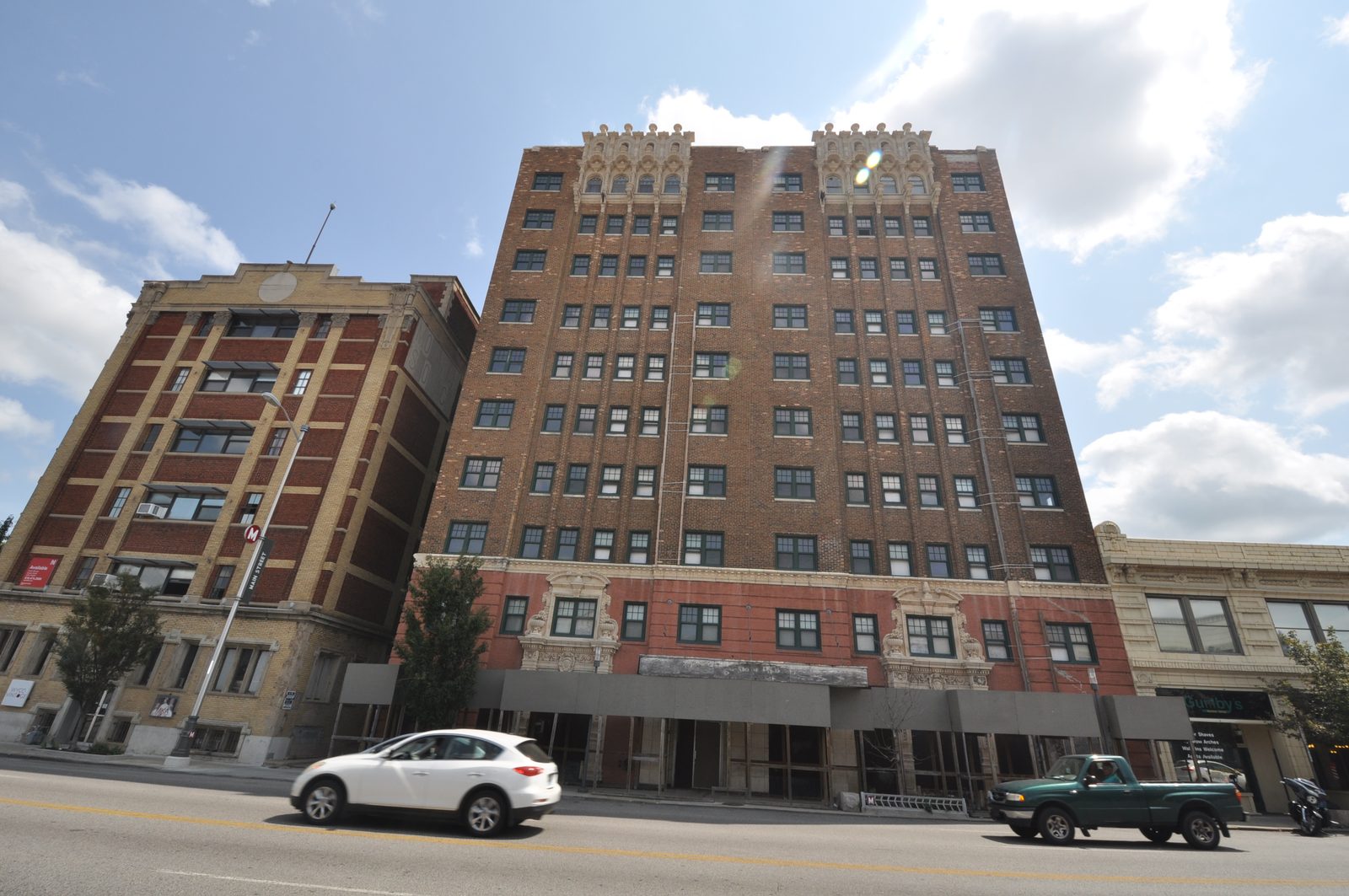
A ten-floor Spanish Revival apartment hotel — on the National Register since 1979 and dark for most of the years since — and the Monarch Storage warehouse beside it. Two decades of rehab attempts failed for lack of capital. We assembled a PIEA construction bond, federal and state credits, New Market Tax Credits, and abatement, and delivered 136 homes across the pair, with a rooftop bar and pool deck above the old Monarch ghost sign, The Canary holding down the restored lobby, and roughly 15,000 square feet of commercial. The Netherland opened mid-pandemic and stabilized at 95 percent full.
Troost Corridor — Kansas City, Missouri
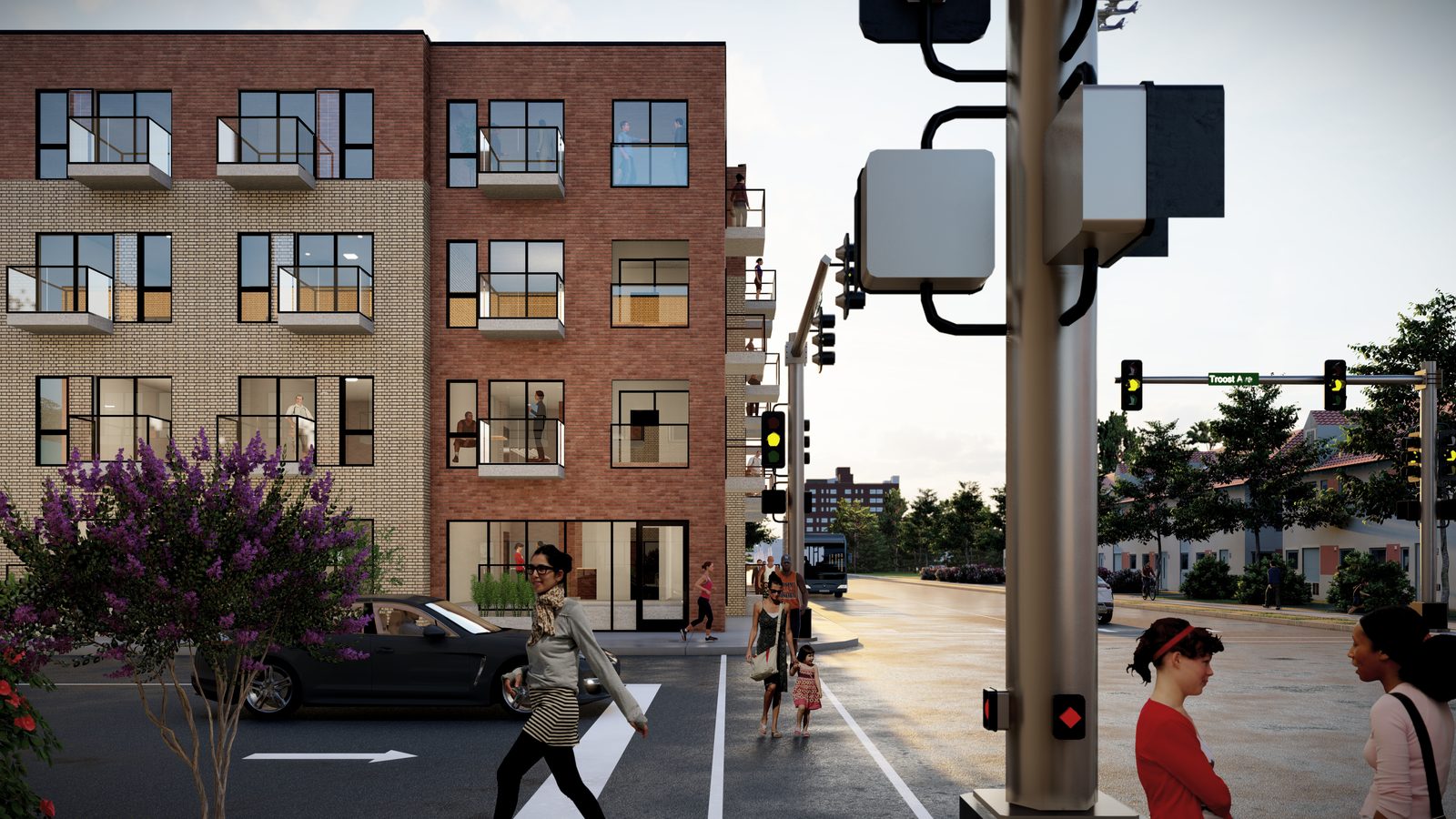
Not every site comes with a building worth saving. The Alana Hotel stood on these lots, and shops, and a Henry's Hamburgers, until the City took them down in the early 2000s. Empty ever since. Two four-story buildings going up, floor plans sized to families that actually live here and rents they can actually pay, built to what the Troost Overlay asks for at the sidewalk. New construction that repairs a street instead of ignoring it.
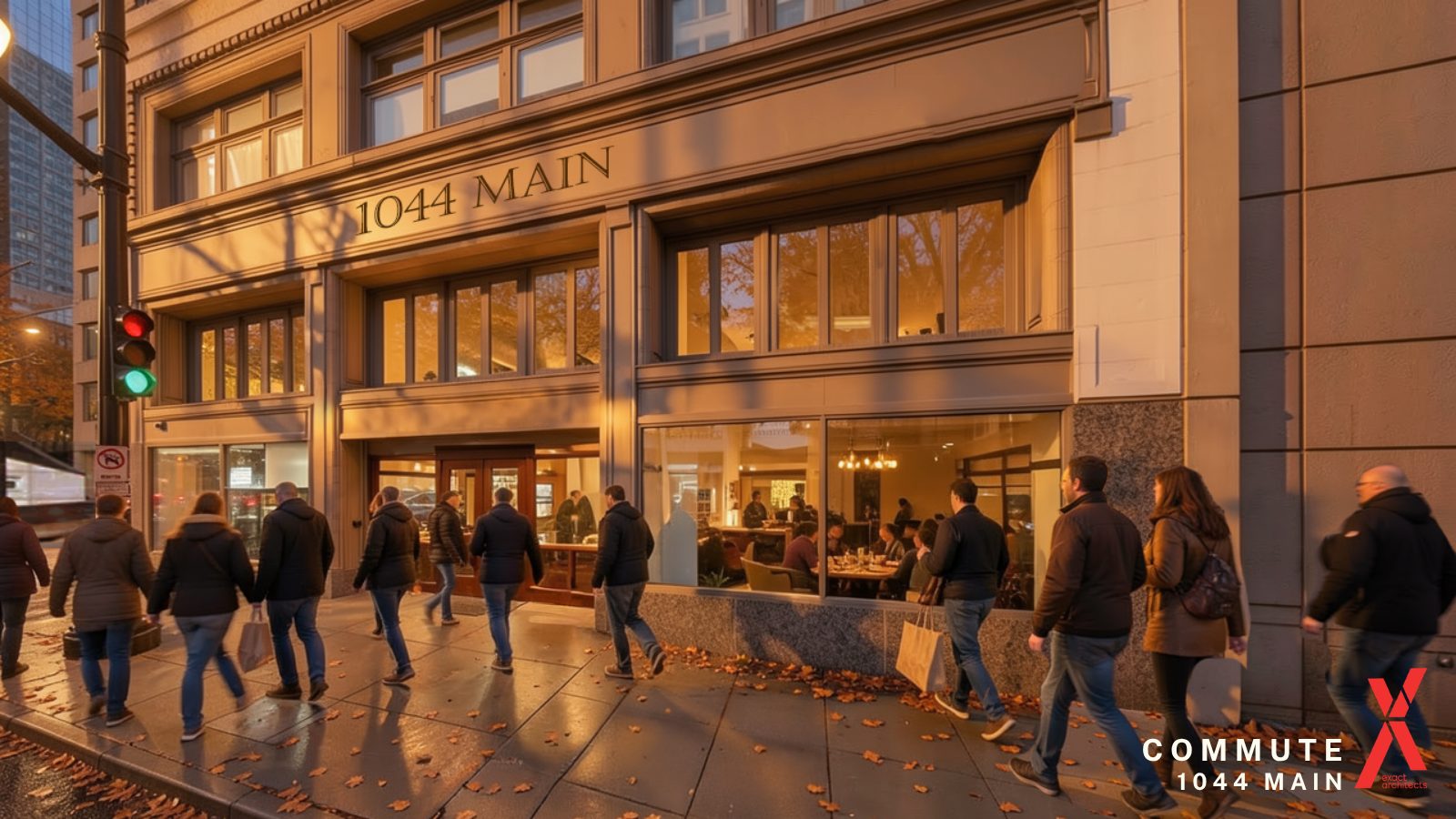
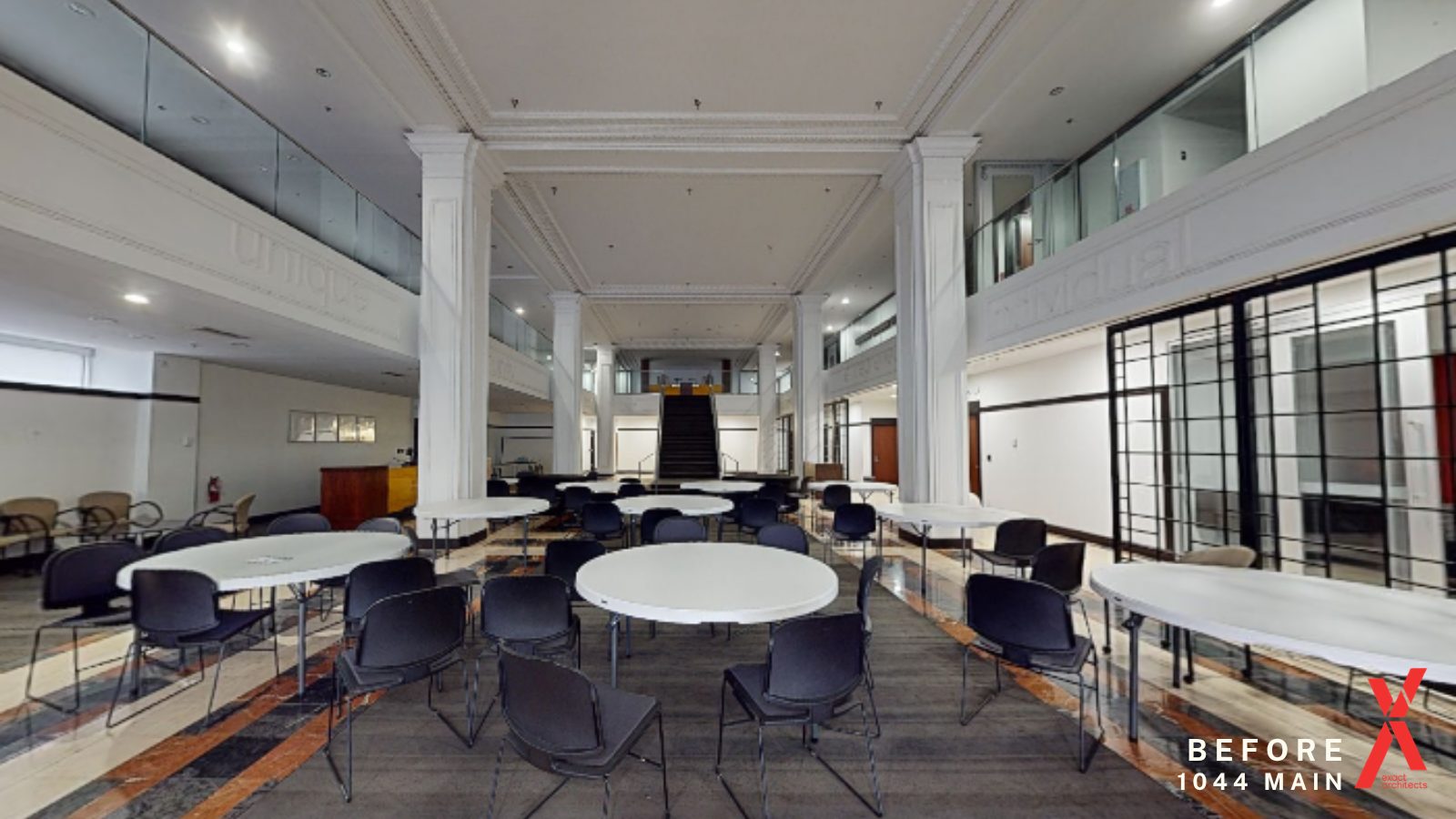
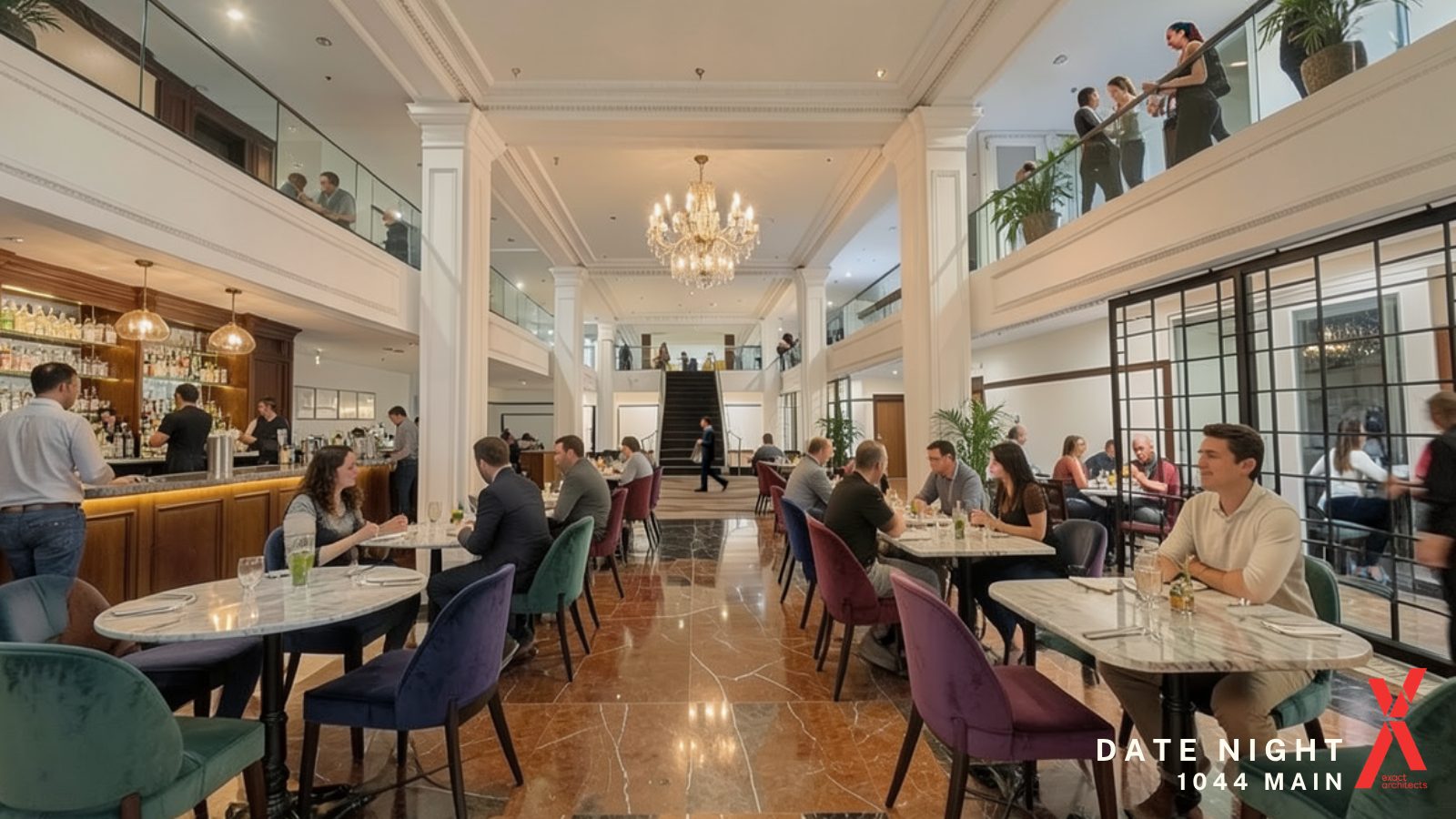
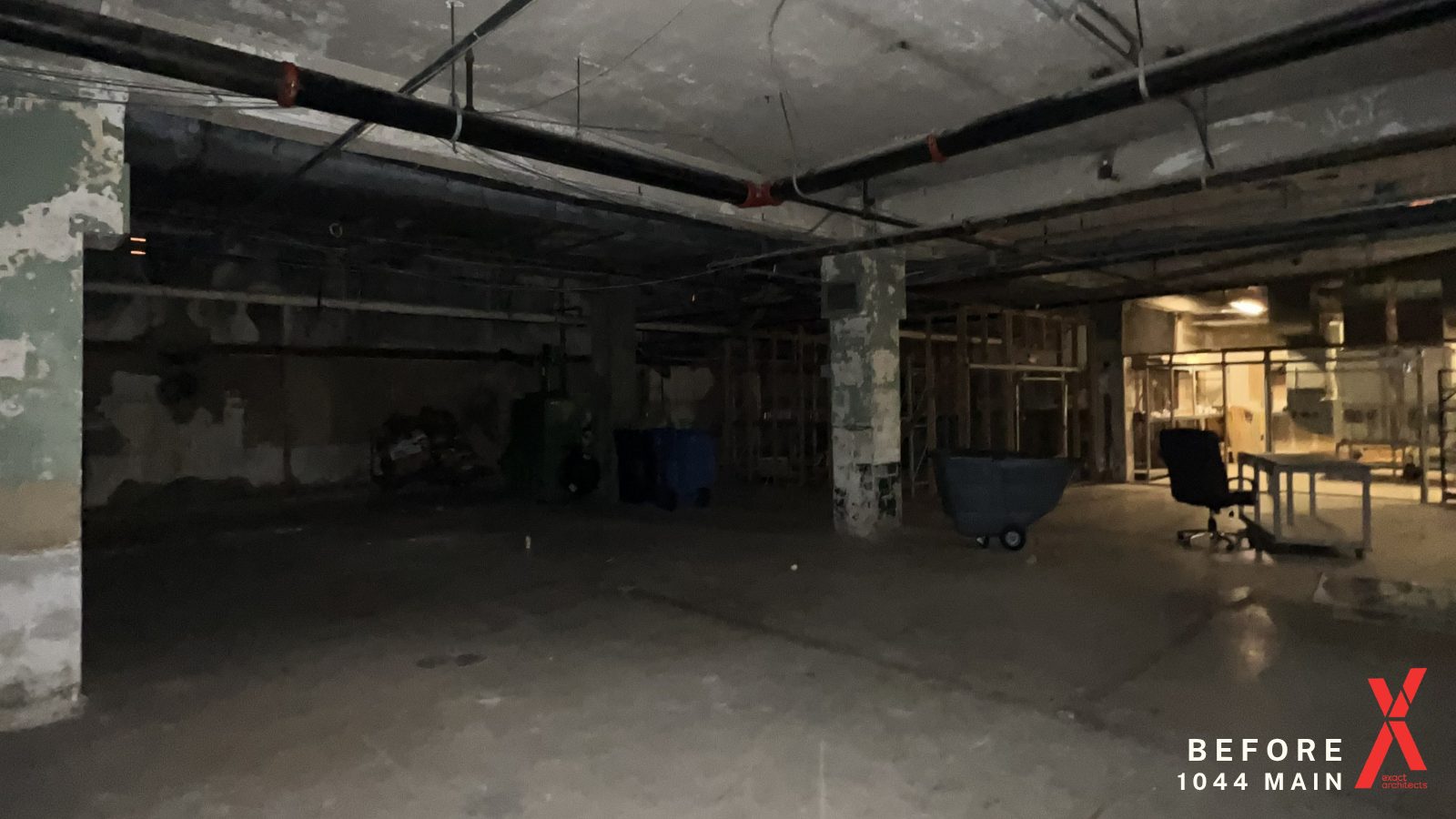
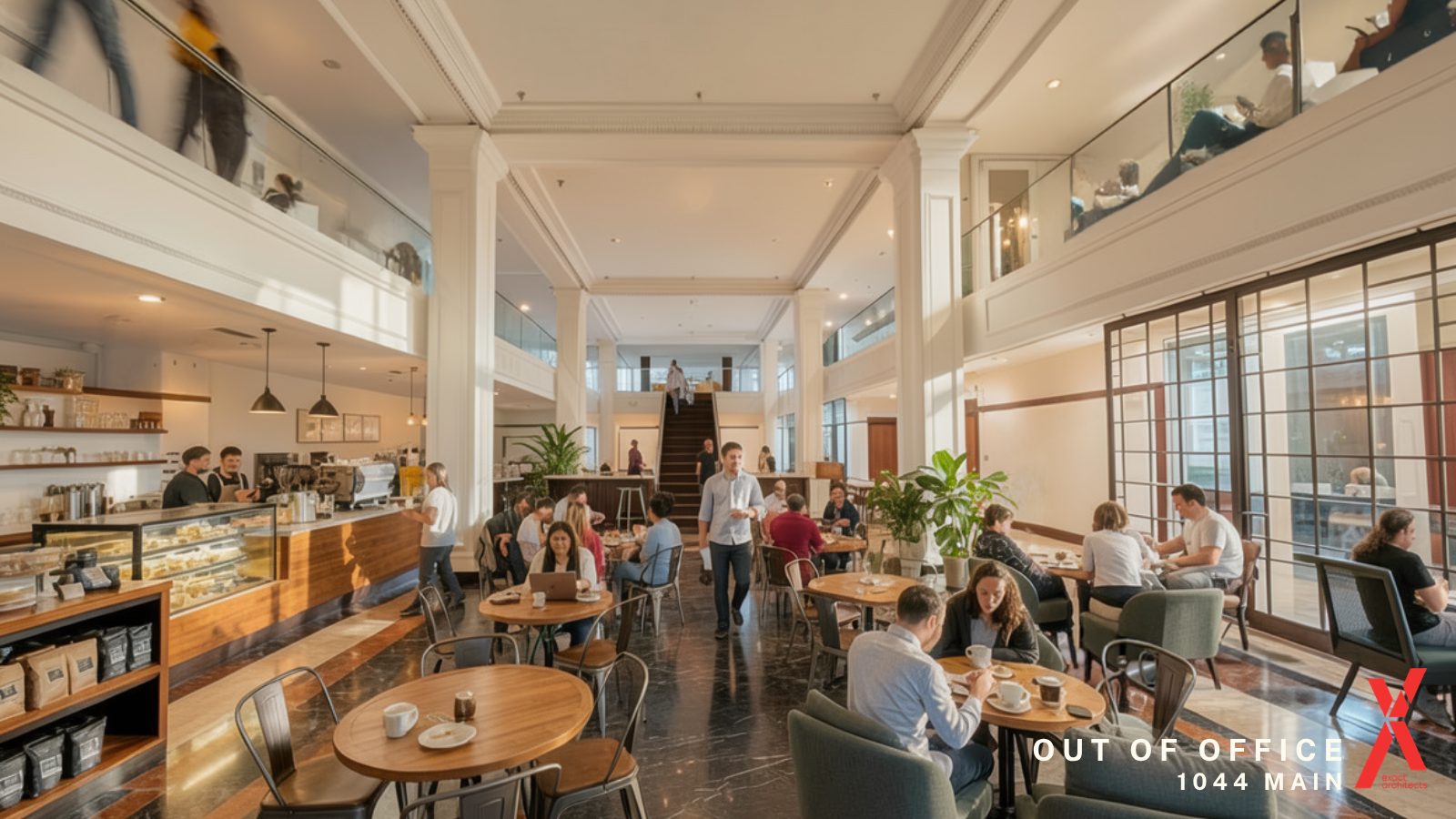
The George B. Peck Dry Goods Co. opened at 1044 Main in 1914, the flagship of the street they called Petticoat Lane. Root and Siemens wrapped it in polished marble, Indiana limestone and enameled terra cotta. It has been largely dark for years. It is going back to work as 74 apartments over 13,134 SF of commercial, with the altered exterior restored and the roof put to use. Listed on the National Register in 1980; in construction now.
45 one-bed · 29 two-bed
A department store floorplate is deep, which is the hard part. The light court and the window line decide where units can go, so the mix came out of the building rather than a spreadsheet.
Root and Siemens, 1914
Polished marble, limestone and enameled terra cotta on the street elevations, with previously altered sections put back. This is the part that makes the credits work and the part people will photograph.
13,134 SF
Ground floor and mezzanine back in use, on a block with the streetcar stopping out front. An empty ground floor is what makes a downtown block feel dead, whatever is happening upstairs.
Federal + Missouri
Roughly $6.5MM in historic tax credits on the stack. Without them a building this complicated stays exactly as it is, which is empty.

Housing is most of what we do. Not all of it. On these, the client was a nonprofit, an operator, or a town — and success got counted in kids served, jobs made, and families who got to own something. Different scoreboard. Still counts.
18,619 SF — Kansas City, Missouri
A center-based therapy facility for children 18 months to 5 years, serving Brookside, Crossroads, the Plaza, and Westport. The plan had to hold individualized ABA programming, social skills groups, and parent support space in one building — clinical requirements driving the floor plan, not the other way around.
3,901 SF — Prospect Avenue, Kansas City
An adult day program added alongside KD Academy's existing childcare center, so families can hand off both generations in one stop. Funded through the Central City Economic Development sales tax program and projected to create six to eight jobs on the East Side.
St. Petersburg, Florida — with Habitat for Humanity
Ten for-sale homes capped at $210,000 for households at or below 80% AMI, built around a restored historic cottage proposed for the St. Petersburg Register. Nine new townhomes take their bungalow cues from the cottage rather than fighting it. Ownership, not rental — a different and harder outcome.
Former Immaculata High School, est. 1890s — Leavenworth, Kansas
A full block of downtown Leavenworth, empty, in a town whose economy runs on the fort. Sixty extended-stay rooms plus bunkrooms for larger groups, and the school theater modernized for conferences and community events — a public room the town lost when the school closed.
Everything a preservation consultant does, performed by the licensed architects and engineers who also draw and build the project — so the tax credit application and the construction documents are written by the same hands and never contradict each other in front of a reviewer.
Part 1 · Part 2 · Part 3
Application, certification, amendments, and appeal — prepared by the architect of record, with the drawings and the narrative built as one document instead of two.
MO · KS · IA · OK · TX · CO
State program applications and certification across six states, sequenced with the federal credit so the two never cannibalize each other.
National Register + Local Landmark
National Register nominations and local landmark designations — the step that unlocks the entire incentive stack, and the one most owners don't know where to start.
Section 106 · HABS-level recording
Historic building documentation and Section 106 compliance for projects touching federal funding, licensing, or permits.
SHPO · NPS · Local Commissions
Client representation in local, state, and federal agency negotiation, regulatory coordination, and the public meetings that decide whether a project moves.
Feasibility before you commit
Credit eligibility screening, condition assessment, and honest feasibility analysis for buyers, lenders, and investors — including when the answer is walk away.
Survey · Advisory · Detailing
Window surveys, replacement advisory, and envelope detailing that satisfies both a preservation reviewer and an energy model.
HUD 221(d)(4) · Fannie · Freddie · Income-based
Design and preservation services aligned with HUD, Fannie Mae, Freddie Mac, and income-based financing — documentation built to survive federal underwriting, because we've carried a $190MM conversion through it.
Four things, mostly. Each one has its own page, because each one has its own set of questions that have to be answered before anybody draws anything.
20% federal · 20–40% state
Part 1, Part 2 and Part 3 written by the same firm drawing the building, then stacked with New Markets, Opportunity Zone equity, housing credits, PACE and abatement.
Floorplate · risers · envelope
Whether an office building can become apartments, answered from the structure rather than the spreadsheet — usually in an afternoon, not a year of design fees.
40% state · no cap
Since 2025 Kansas pays 40% of qualified costs on most commercial rehabilitations, with no statewide cap and no allocation round — 60% stacked with the federal credit. Estimate it on the page.
25% state · transferable
Twenty-five percent, sellable, three-year carryback. Nearly every finished building in our portfolio was financed this way. Estimate it on the page.
250+ keys delivered
Key count set by the bays, brand standards negotiated against preservation review, and back of house found in a building that never had any.
Two weeks · no cost
Send an address. We walk it and come back with what it wants to be, what that runs, and what it earns — including when the answer is to walk away.
Most of these buildings only work because somebody knew which programs they could carry, and in what order. That is the part we handle. You do not need to learn any of it — you need somebody who already has.
20% of qualified costs
The base layer on most of what we do. We prepare the applications ourselves, alongside the drawings, so the paperwork and the building never tell a reviewer two different stories.
20% to 40%, depending where you stand
This is where the arithmetic changes. Kansas pays 40% with no cap. Texas, Missouri, and Iowa 25%. Oklahoma 20%. Same building, different side of a state line, genuinely different answer.
Larger mixed-use projects
Strong on bigger commercial and mixed-use work, with rules that rule out straight apartment conversions. If your project has real commercial space in it, this is worth a conversation.
Patient capital, ten-year horizon
Useful when the equity can sit still for a decade, and now noticeably friendlier to smaller towns than it used to be. We will tell you quickly whether your site qualifies.
Affordable and workforce housing
Federal housing credits, twinned with historic where the building and the rents both allow it. Several states add a match on top that is close to dollar for dollar.
The local layer
Negotiated at the city and county level. Individually modest. Stacked underneath everything else, often the difference between a deal that closes and a building that sits another decade.
HUD · Fannie · Freddie
Documentation built to survive federal underwriting, because we have carried a $190MM conversion through it. Debt and credit equity have to be sequenced against each other from the first pro forma.
Usually the useful part
Not every program belongs on every project, and two of them can quietly cancel each other out. Deciding what to drop is most of the skill. We would rather tell you that early than at closing.
State credits changed in the last two years, and not evenly. The same building can pencil on one side of a state line and not the other. We work in six states and quote the real numbers, because the spread is now wide enough to decide a project.
40% · no cap
Forty percent of qualified costs on most commercial rehabilitations, in big cities and small towns alike, with no statewide cap and no waiting list. With the federal credit that is 60%. It is the best state program in the country right now, and it is on our doorstep.
25% · home ground
Twenty-five percent, sellable, plus a state housing credit that matches the federal award. Most of our finished portfolio is here — 929 Walnut, The Dairy, Harvey Dutton, the Wonder, ABC & Anderson. We know the reviewers by name and the calendar by heart.
25% · no cap
No cap, freely sellable, and unusually forgiving on the technical requirements that sink marginal projects elsewhere. Nonprofits and universities can use it too. Long rehabilitations can be phased so the credit pays out sooner.
20% · no cap
Twenty percent, no cap, sellable. The state application runs alongside the federal one instead of after it, which takes months out of the front end. Tulsa, Oklahoma City, Guthrie, Bartlesville, Enid, Muskogee.
25% · refundable
Twenty-five percent and refundable, which is rare and worth real money — it does not need a tax appetite to convert, so it prices closer to par. The Rath Administration Building in Waterloo is ours.
25% · 35% in smaller communities
Twenty-five percent, rising to 35% in communities under 50,000. Nonprofits may participate. We carried the Denver VA Medical Center conversion — 493 apartments on a decommissioned federal campus — through agency underwriting here.
This is the whole road, start to finish. Most people need three or four stretches of it. Some need all six. Tell us which and that's what we'll price — we're not going to make you buy the whole road to get one mile of it.
Existing conditions, highest and best use, unit yield studies, order-of-magnitude cost, and an honest read on whether the building qualifies for credits. Sometimes the answer is don't do it, and you should hear that in week three instead of month nine.
National Register nominations, SHPO Part 1 and Part 2, local landmark review, rezoning, overlay conformance, variances, and the neighborhood meetings that decide whether any of it happens.
Federal and state historic credits, LIHTC, New Market Tax Credits, TIF, PACE, LCRA and PIEA abatement, land bank acquisition, and the sequencing that keeps them from cannibalizing each other. We design to each program's requirements — HUD 221(d)(4), Fannie Mae, Freddie Mac, and income-based financing included — so the drawings and the underwriting never contradict each other. This is the practice most architects hand off. We don't.
Full architectural and engineering services, existing-conditions modeling, code and life-safety strategy for buildings that were never meant to be housing, permit sets, and project manuals.
Design-build with a guaranteed maximum price if you'd rather buy a number than manage a process — or straight construction administration if you already have a builder. Buyout, subcontracts, pay applications, and SHPO Part 3 close-out.
Certificate of occupancy, lease-up support, commercial tenant fit-out, credit compliance, and the reporting that keeps the stack intact through the recapture period. We operate a portfolio of our own buildings, so the operating plan comes from people who answer tenant calls — and the completed residential portfolio sits at 100% stabilized occupancy.
Most of our work comes from people who own something difficult and need to know what to do about it. We aren't bidding against you and we don't want your deal — we want to be the firm you call when the building is complicated and the math has to hold.
Before drawings
The first question isn't what it could look like, it's whether it works at your basis. We'll walk it, tell you what it wants to be, what it runs, and what credits it earns — and if the answer is that it doesn't pencil, you'll get that answer too, for free, before you're into it.
$16MM — The Wonder
Not that historic credits exist. What they're worth on your building, in your state, at your timeline, and which two of them quietly cancel each other out. The Wonder carried Missouri HTC, New Markets through AltCap, and PIEA abatement at once. That stack is why it got built.
Part 1 · Part 2 · Part 3
The usual failure is a consultant's Part 2 narrative contradicting the architect's construction documents in front of a reviewer, and nobody notices until it comes back denied. Same firm writes both here, so they say the same thing.
$190MM — Denver VA
493 apartments on a decommissioned federal campus, through HUD 221(d)(4). If your capital stack has an agency lender in it, we've already learned where that documentation gets picky.
95% stabilized occupancy
Every move on a historic building either earns rent, satisfies a reviewer, or costs you. Plenty of good-looking decisions do none of the three. Knowing which is which is most of what you're hiring.
Five-year compliance
Historic credits recapture if the building leaves service inside five years, and that's a documentation problem, not a design problem. It happens when the architect left at substantial completion. We don't.
Small on purpose, and senior all the way through. Whoever's across from you in that first meeting is who carries it. On a historic deal that's not a nicety — the architect, the money, and the builder have to agree in the same room on the same afternoon, or it falls apart later in underwriting when it costs you real money.

Managing Partner — Architecture & Incentives
Owns: the vision, the deal, and the outcome
Caleb is usually the first one inside the building — flashlight, notebook, and a habit of seeing the finished thing before anyone else can. He's spent twenty years as a licensed architect on the money side of these deals, so when he tells you a design works, he means the pro forma works too. Clients keep his cell number. Studied business and architecture at the University of Nebraska, which explains a lot.
Partner — Architecture & Engineering
Owns: design quality and technical documentation
Tyler is the one who figures out how a hundred-year-old building actually passes code as housing — the quiet, unglamorous problem-solving that decides whether a project gets a permit or a redesign. His drawing sets have a reputation for surviving preservation review the first time, which saves clients months they never see. Kansas State, and the most patient person in the office.
Senior Partner — Incentives & Community Partnerships
Owns: the capital stack and public financing
Bob has spent thirty years making impossible deals close. Historic credits, housing credits, abatements, private debt — he's stacked all of it, for developers and for nonprofits, and he runs a commercial loan brokerage on top of it. When he says a project pencils, lenders tend to agree. He's the reason the money conversation here starts in week one instead of month six.
Design-Build — Senior Project Manager
Owns: delivery, buyout, and the guaranteed number
Jay came up through the trades — pipefitting and HVAC — which means he understands the systems that most often wreck a historic conversion better than the subcontractors bidding them. He runs buyout, the schedule, and the guaranteed maximum price, and he's not shy about walking a floor to check the work behind the drywall. When Jay gives you a number, it's a number.
Director of Operations
Owns: closings, compliance, and stabilization
Ashley is the person who makes sure it all actually happens — closings that fund on time, compliance that survives an audit, certificates of occupancy that show up when the leases say they will. The portfolio sitting at full occupancy is her scoreboard as much as anyone's. The Kansas City Business Journal has recognized her leadership in commercial real estate, and everyone who's worked a deal with her understands why.
Senior Associate
Owns: project management and permit delivery
Hunter manages projects the way you'd want yours managed — daily contact with owners, contractors, and city staff, across a portfolio north of $200 million. He's also stood up at the state capitol and made the case for what this work does for neighborhoods, which tells you something about how he sees the job. Give him a deadline and get out of the way.
Project Designer
Owns: unit planning and interior resolution
Annie decides whether a converted floor plate feels like a home or a compromise — the unit layouts, the light, the hundred interior calls that show up later as lease-up speed. She models the existing buildings, draws what's really there, and fights for the details residents notice without knowing why.
Licensed P.E. Designers
Owns: structure, systems, and the stamp
Behind every project stands an experienced team of licensed professional engineers — structural, mechanical, electrical, plumbing, and civil — working inside the design process rather than downstream of it. On a hundred-year-old building the engineering is where a conversion lives or dies, and ours starts in the same room as the drawings.
Hiring
Leasing and marketing, architecture and design, construction, and estimating — all of it in Kansas City, all of it on buildings you can walk to. See the roles →
Four open roles in Kansas City. Small firm, senior people, and work you can point at from the street — every one of these seats touches buildings that were empty when we found them. No recruiters, no portal, no six-week silence. Send a note and a link, and a partner will read it.
Lease-up · brand · the buildings we finish
You run lease-up on finished buildings and the marketing that fills them — tours, listings, collateral, social, launch events, and the broker relationships that make a grand opening feel inevitable. You will work on real properties with real occupancy targets, not a content calendar. Some leasing or multifamily marketing experience helps; knowing how to write a sentence helps more.
Historic rehabilitation · adaptive reuse
Drawings, details, and the Secretary of the Interior's Standards on hundred-year-old buildings. You will work on conversions from existing-conditions survey through construction administration, and you will see the thing get built, because we build it. Licensed or on the path. Revit fluency expected. Curiosity about how an old building was actually put together expected more.
Design-build delivery · GMP
You own delivery. Subcontractor buyout, schedule, budget, and the guaranteed maximum price on historic rehabilitations where the surprises are structural and the reviewer has opinions. You will sit in the same room as the architects from the first pro forma, which is the entire point of doing it under one roof. Senior experience in commercial construction required; historic work a real advantage.
Preconstruction · historic rehabilitation
Conceptual estimates on buildings nobody has priced in forty years, then hard numbers as the drawings firm up. Your estimates decide whether a project happens, so they have to hold up in front of a lender. Quantity takeoff, subcontractor scoping, and a working feel for what surprises a 1920s building tends to hide. Commercial estimating experience required.
These get handed to the building, not to us, and that's how it ought to be. A jury read the nomination, walked the place, and set it next to every other rehab finished in this region that year. Then they picked.
The Dairy Apartments — Aines Dairy, 3130 Gillham Road.
Harvey Dutton Lofts — Harvey-Dutton Dry Goods Co., 800 Broadway Boulevard.
800 Broadway historic restoration · The Dairy Lofts · Townhouse Hotel restoration
Ben Day Lofts · Carnegie Library · Wyndham Trademark, Leavenworth
HyVee Arena · Wonder Shops + Flats
The Dairy Lofts · The Riley School · The Monarch
The Netherland Residences & Hotel · Hall Lofts
Firm-wide recognition for the integrated architecture, incentives, and delivery practice.
A decade of independent coverage — the Star, the Business Journal, Flatland, Startland, KCUR, and the trade press. Read the dates: the early pieces called these properties eyesores and the plans long shots. The recent ones read differently, because now there's a streetcar running past finished buildings and a hotel taking guests in one of them.
Inside the conversion of the 1919 Mutual Building, from vacant floors to 84 guest rooms and a restaurant at the sidewalk.
Trade coverage of the opening, the brand conversion, and what the building keeps from 1919.
The city’s development agency on the finished building, The Vault amenity floor, and Remedy on the ground floor.
National hospitality trade coverage of the Mutual Building reopening as an 84-key hotel.
The brand’s announcement of the opening, in the trade press that hotel owners actually read.
The Mutual Building at 13th and Oak takes guests again after a top-to-bottom historic rehabilitation.
What the rehabilitation kept: the Art Deco detail, the original bank vault, and the corner itself.
Seventy-four apartments planned for a department store that has been largely dark for years.
From Historic Kansas City's most-endangered list in 2019 to a preservation success story — the ABC rehab moves forward ahead of a summer 2027 opening.
Fifty-two apartments, 9,152 SF of commercial and a rooftop lounge, on the streetcar extension.
The region's streetcar development roundup, with Bob Mayer on why historic renovation keeps these apartments moderately priced — and ABC & Anderson on the watch list.
A profile of the practice covering the Wonder, the Dairy, and ABC — and the tax credit strategy underneath all three.
Kevin Collison on the Wonder as the anchor of a string of new Troost investments — with the 1949 bread truck holding court on the rooftop.
The $12 million ABC and Anderson plan, announced as Exact continued converting Midtown buildings to apartments.
Nobody had lived in the Hawthorn Plaza building at 39th and Main for thirteen years. The abatement is what unlocked it.
The Immaculata High School block, acquired from the Archdiocese of Kansas City, Kansas.
Public radio on the Netherland — an eleven-story former hotel, and the first of the Main Street transit bets.
A six-part series on new development along Troost Avenue — Kansas City's historic racial and economic dividing line — with the Wonder at its center.
A 1923 school building, shuttered for decades, and the plan to bring it back as the Broadway Residences.
The Campbell Baking factory on 30th Street, before it became 87 lofts and sixteen commercial bays.
The Aines Dairy plant, nine years before it won Historic Kansas City's adaptive re-use honors.
The questions we actually get asked, answered the way we would answer them on the phone. If the honest answer is that a credit will not work on your building, that is the answer you will get here too.
Yes, and on most of our projects we do. The federal credit is 20% of qualified rehabilitation expenditures. State credits stack on top and vary widely — Kansas pays 40% on qualifying rehabilitations, Texas and Missouri 25%, Oklahoma 20%. The two programs run on separate applications and separate timelines, and sequencing them wrong is the most common way a project loses credit value it had already earned.
Kansas pays 40% of qualified expenditures on rehabilitations of $50,000 or more in cities over 50,000 people, and 40% in cities, townships and unincorporated areas of 50,000 or under. Nonprofits also receive 40%. Smaller work in larger cities receives 25%. There is no statewide annual cap and no per-project cap, the credit is transferable, and it carries forward ten years. With the 20% federal credit, that is 60% of qualified costs.
Sometimes, and the constraint catches people out. A qualified active low-income community business cannot draw 80% or more of its gross income from residential rental, so a straight apartment conversion usually will not qualify. Mixed-use does. The Wonder Shops and Flats works because 87 lofts sit above 16 commercial bays — the commercial income and the jobs behind it are what make the entity eligible. Below roughly $10MM in total project cost, the allocation competition is rarely worth the structuring cost.
They can, but not by default. The historic credit investor generally needs a pass-through or master lease position, while a Qualified Opportunity Fund needs a qualifying equity interest in the operating business. Forcing one party to do both is where these deals break. The cleaner answer is to keep them in separate positions, which is far easier in states where the state credit is transferable and can simply be sold rather than held inside the ownership structure.
The program is permanent now, with a rolling five-year deferral and a 10% basis step-up at year five. A new Qualified Rural Opportunity Fund class carries a 30% step-up. For historic work the quieter change matters more: the substantial improvement test for rural property dropped from 100% of basis to 50%. On a rural rehabilitation that hurdle often forced overbuilding. At 50%, a proportionate rehabilitation qualifies.
It needs to be listed on the National Register, contribute to a listed district, or be eligible for listing — and the rehabilitation has to meet the Secretary of the Interior's Standards. Plenty of buildings that look too far gone qualify, and some that look pristine do not, because of earlier unpermitted work. If designation is missing, that is a step we handle, not a reason to stop. Send an address and we will tell you inside two weeks.
If the building leaves service or changes hands inside the five-year compliance period, the IRS can recapture part of the credit, stepping down 20% a year. In practice recapture is a documentation and operations problem rather than a design problem — it happens when nobody owns compliance after the ribbon. We stay on the buildings we finish, so that responsibility does not get handed off at the certificate of occupancy.
Part 1 establishes that the building is a certified historic structure. Part 2 describes the proposed work, and is where approval is won or lost. Part 3 certifies the completed rehabilitation and releases the credit. The usual failure mode is a Part 2 narrative written by a consultant who never saw the construction documents, contradicting the drawings in front of a reviewer. We write both, so they say the same thing.
Here's how it usually goes. You hire an architect. Then you go find money. Then you go find a builder. Three contracts, three calendars, three people who each did their part right — and when the thing runs six months long and a million over, every one of them can look you in the eye and tell you it wasn't them. And they'll all be telling the truth.
That's not a people problem. That's a structure problem. Nobody was ever standing in the middle holding all of it.
So stand us in the middle. One firm, accountable end to end — the drawings, the credits, the closing, the build, the certificate of occupancy, and the lease-up after. One name on it. One number to call when you're wondering at two in the morning.
No cost, no obligation, no pitch deck waiting on the other end
An address and two sentences will do it. First conversation's on us, and it usually ends with a straight answer about whether the thing is worth chasing. Sometimes that answer is don't. You'll get it either way.
If your mail app did not open, copy this and send it to office@exactarchitects.com
EXACT Architects
816.200.0340
office@exactarchitects.com
Caleb Buland, AIA — Managing Partner
Bob Mayer, MPA — Incentives + Community Partnerships
Tyler Asby, AIA — Architecture Studio
EXACT Architects
3901 Main Street, Suite 201
Kansas City, Missouri 64111
Responding to an RFQ?
Our qualifications package covers project history, references, insurance, and SHPO experience.
Request the capabilities PDF.
Serving historic downtowns across six states — Missouri: Kansas City, St. Louis, St. Joseph, Springfield, Joplin, Sedalia, Cape Girardeau · Kansas: Leavenworth, Topeka, Wichita, Lawrence, Atchison, Hutchinson, Salina, Fort Scott · Iowa: Des Moines, Waterloo, Dubuque, Davenport, Cedar Rapids, Sioux City, Council Bluffs · Oklahoma: Tulsa, Oklahoma City, Guthrie, Bartlesville, Enid, Muskogee · Texas: Fort Worth, San Antonio, Galveston, Waco, Dallas, El Paso, Amarillo, Beaumont · Colorado: Denver, Pueblo, Colorado Springs, Trinidad, Leadville, Grand Junction
Mail app did not open? Write to office@exactarchitects.com